
Health Precautions for Traveling in Mexico
When planning a trip to Mexico, it’s essential to consider health precautions to guarantee a smooth journey. You’ll want to consider vaccinations, food and water safety, and guard against mosquito-borne illnesses. Are you prepared with a travel health kit and aware of the regional climate challenges? There’s more to explore about staying healthy and safe while enjoying all Mexico offers.
Key Takeaways
- Consult your healthcare provider 6 to 8 weeks before travel for vaccination updates, including Hepatitis A, Typhoid, Tdap, MMR, and influenza.
- Consume only fully cooked foods and bottled water, avoiding raw seafood and street food to ensure safety.
- Use DEET insect repellent and sleep under mosquito nets to prevent mosquito-borne diseases like malaria and dengue.
- Ascend gradually in high-altitude areas, stay hydrated, and rest if experiencing altitude sickness symptoms.
- Pack a travel health kit with hand sanitizer, medications, insect repellent, water purification tablets, and high SPF sunscreen.
Essential Vaccinations for Mexico Travel
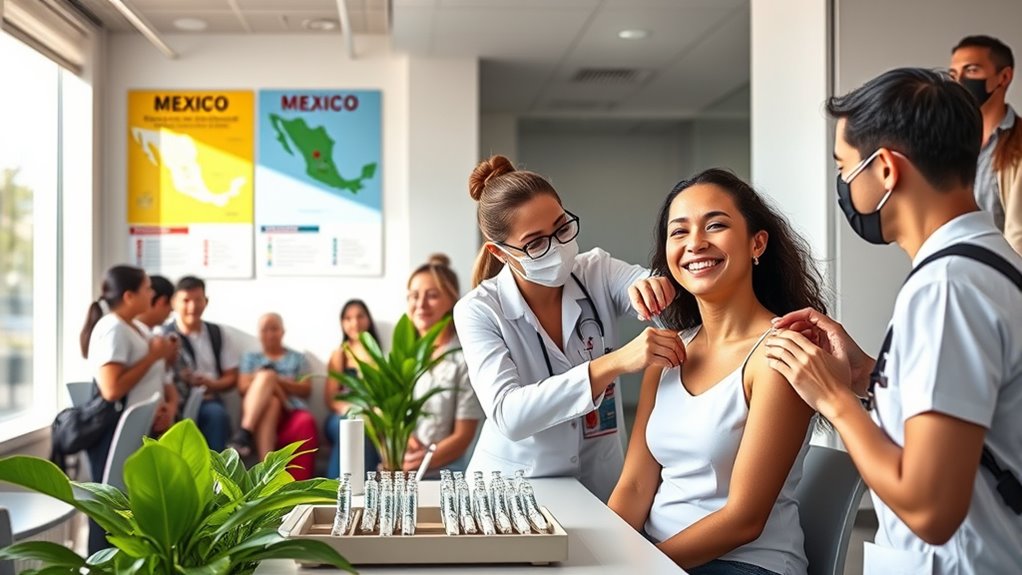
When planning a trip to Mexico, ensuring you’re vaccinated is crucial for a safe and healthy journey.
Vaccines protect you from health risks specific to the region. The CDC recommends Hepatitis A and Typhoid vaccines, especially if you’re consuming food and water from local sources.
Routine vaccinations like Tdap, MMR, and influenza are essential for protection against common illnesses. A rabies vaccine is recommended for people who interact with animals or travel to remote areas.
A cholera vaccine might be advised for higher-risk travelers visiting places with poor sanitation.
Consult your healthcare provider 6 to 8 weeks before departure to confirm that your vaccines are current and suitable for your travel plans. This will ensure that you’re well-prepared for your Mexican adventure.
Food and Water Safety Measures
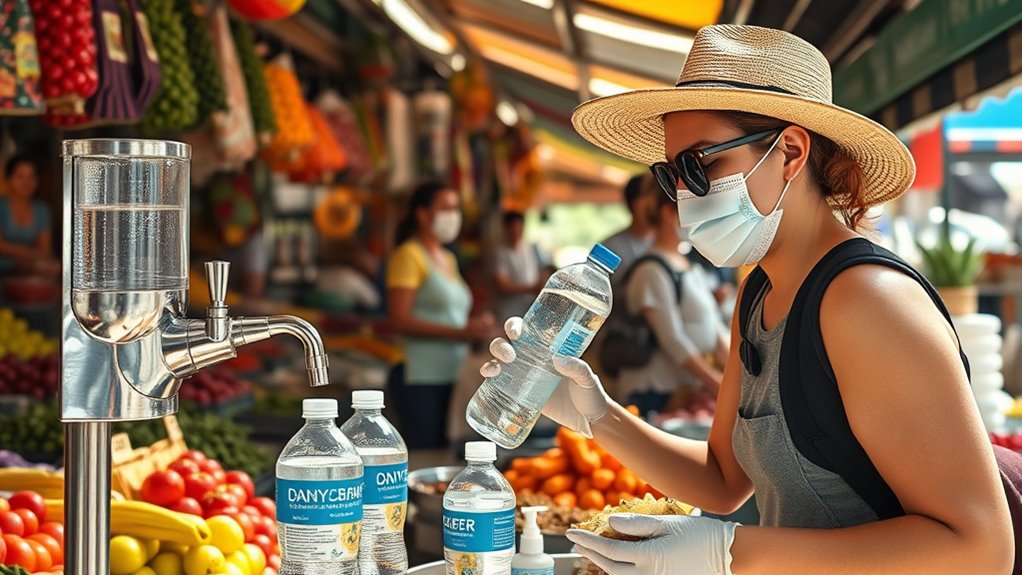
As you explore the vibrant culinary scene in Mexico, it’s crucial to prioritize food and water safety to protect yourself from potential health issues.
To minimize the risk of foodborne illnesses, stick to fully cooked foods and steer clear of raw seafood. Always choose bottled water over tap water, and be cautious with ice, as it might be made from contaminated water.
Opt for dining at reputable restaurants and avoid street food that may be prepared in unsanitary conditions. Maintain good hand hygiene by regularly washing your hands and using hand sanitizer.
Bringing a diarrhea kit with medications can be a lifesaver if you encounter contaminated food or water issues. Stay vigilant, and enjoy your culinary adventures safely.
Protecting Against Mosquito-Borne Illnesses
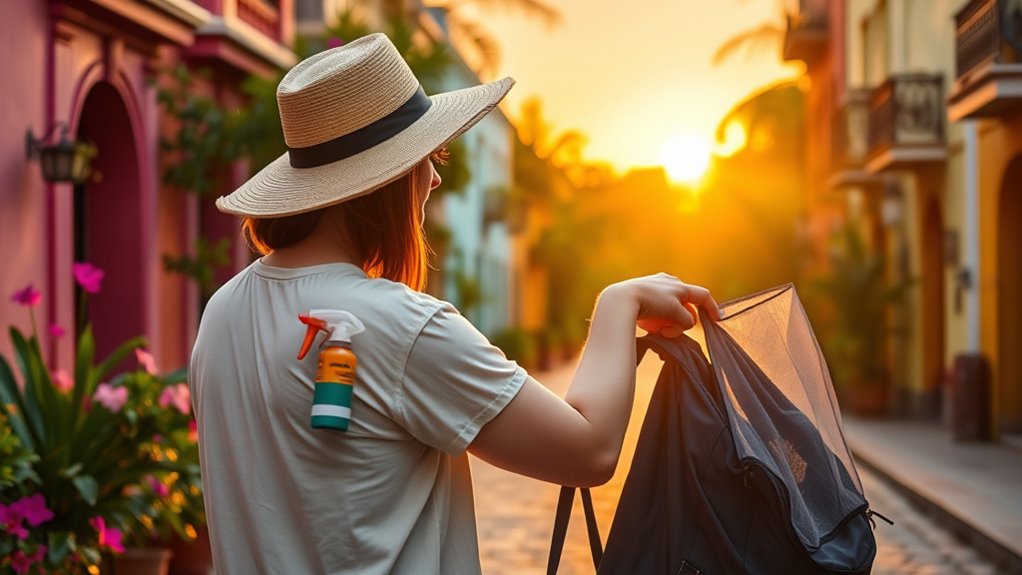
While enjoying Mexico’s culinary delights, protecting yourself from mosquito-borne illnesses is important.
Travelers to Mexico should arm themselves with insect repellents containing DEET or similar ingredients to fend off pests like those carrying dengue and Zika.
Wear long sleeves, especially during the day when mosquitoes are most active. If you’re in rural or jungle areas, sleeping under a mosquito net can be essential for avoiding malaria and dengue.
Stay away from standing water, a favorite breeding ground for mosquitoes. Indoors, use air conditioning or window screens to keep mosquitoes at bay.
Finally, monitor local health advisories and outbreaks to adjust your precautions as needed. Stay informed and stay protected.
Managing Altitude and Climate Challenges

Traveling to Mexico can be an exhilarating experience, but it comes with its own altitude and climate challenges. Altitude sickness is common in places like Mexico City, where high elevations exceed 7,000 feet. Symptoms like headaches and dizziness can unsettle you, so ascend gradually, hydrate well, and ease into activities.
Meanwhile, heat-related illnesses pose risks in Mexico’s warm climate. Stay cool by drinking fluids, wearing lightweight clothes, and avoiding peak sun exposure. The combination of high altitude and heat can increase dehydration risks, so keep an eye on your fluid intake.
| Challenge | Prevention Tips |
|---|---|
| Altitude sickness | Ascend slowly, hydrate, and avoid strenuous activity |
| High elevations | Monitor symptoms, rest when needed |
| Heat-related illnesses | Drink fluids, wear light clothing, and avoid the sun |
| Dehydration risk | Replenish electrolytes regularly |
Health Risks and Infection Awareness
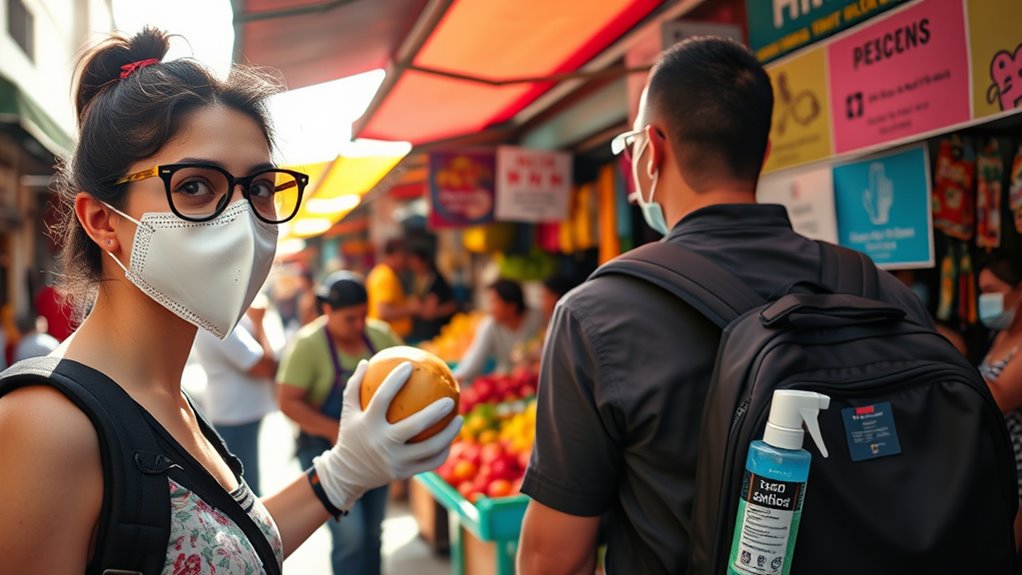
When traveling in Mexico, you should be aware of common illnesses like travelers’ diarrhea, which often comes from contaminated food or water.
Mosquito-borne diseases such as malaria, Zika, and dengue fever are also concerns, so if you’re visiting high-risk areas, make sure to use repellents and consider protective medications.
Prioritize eating at reputable places and practice safe hygiene to minimize the risk of infections like salmonella.
Common Illnesses in Mexico
Though Mexico is a vibrant and engaging destination, travelers should know several health risks to guarantee a safe journey.
“Turista,” or traveler’s diarrhea, often results from contaminated food or water, so it’s crucial to dine at reputable establishments and keep hydrated. Consulting a travel health specialist can help you understand the risks and preventative measures for food and water safety.
Also, mosquito-borne illnesses like dengue and Zika are prevalent, so use insect repellent and protective clothing.
In certain areas, like Campeche and Quintana Roo, intermittent malaria is a risk; talking to a health professional can offer guidance on the necessary precautions.
Mosquito-Borne Disease Precautions
While Mexico offers a rich tapestry of experiences, it’s important to know about mosquito-borne diseases like Zika, dengue fever, and chikungunya. Protect yourself by using insect repellents with DEET and wearing long sleeves, especially at dawn and dusk. Be mindful of dengue symptoms, including high fever and joint pain, and seek medical help. Pregnant women should be cautious of the Zika virus due to its risk of congenital disabilities.
| Symptoms | Precautions |
|---|---|
| High fever | Use insect repellents |
| Severe headache | Wear long-sleeved clothing |
| Joint pain | Avoid peak mosquito activity hours |
| Rash | Stay informed on health advisories |
| Risk for pregnancy | Consider postponing travel to Zika-affected areas |
Stay informed about regional health advisories to guarantee a safe trip.
Preparing a Travel Health Kit
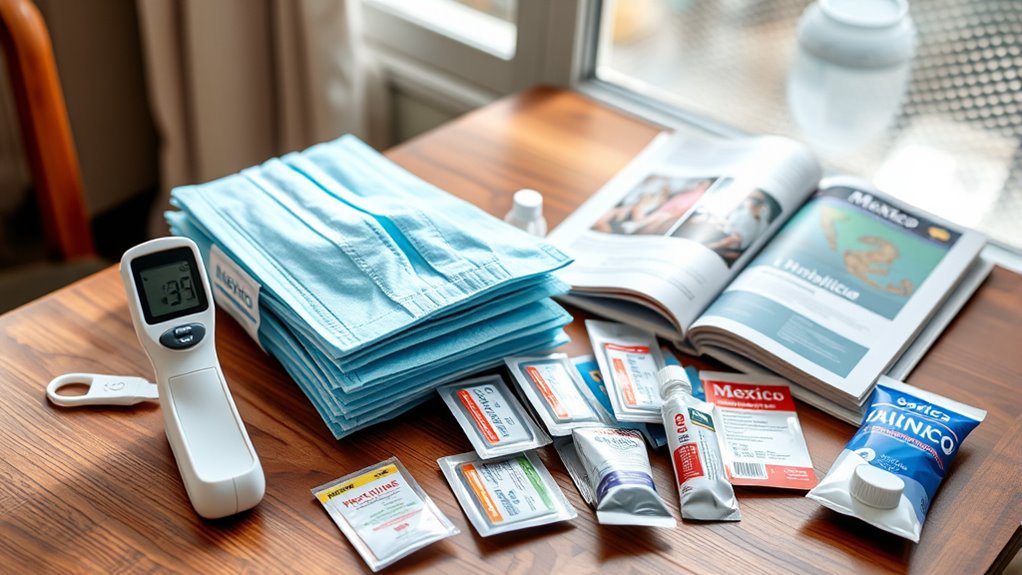
Creating a well-stocked travel health kit is essential for a safe and comfortable trip to Mexico. It’s wise to follow medical advice by packing essentials that address common health concerns.
Include hand sanitizer and wet wipes since these personal hygiene products might be costly or scarce. They’ll help maintain cleanliness and reduce infection risks.
Pack medications like anti-diarrheal, antihistamines, and pain relievers to tackle common travel-related ailments.
Don’t forget insect repellent with DEET to protect against mosquito-borne illnesses like Zika and dengue fever.
Water purification tablets are handy if bottled water isn’t available, especially in remote areas.
Finally, sunscreen with a high SPF and aloe vera will safeguard your skin against sunburn and aid in recovery after sun exposure.
Conclusion
While traveling in Mexico, your health should be a top priority. Get vaccinated against Hepatitis A and typhoid, and keep up with routine shots like Tdap and MMR. Stick to bottled water and fully cooked meals, and don’t forget to wash your hands often. Protect yourself from mosquito-borne illnesses with DEET repellent and long sleeves. Pack a health kit with essential medications and sunscreen. By taking these precautions, you’ll enjoy a safer and healthier trip.
FAQs
1. What Precautions Should You Take When Traveling to Mexico?
When traveling to a new destination, always ensure your vaccinations are current, drink bottled water, use DEET mosquito repellent, and pack a travel health kit. Consult a healthcare professional for personalized advice before your trip.
2. How to Avoid Getting Sick When Traveling to Mexico?
To avoid getting sick in Mexico, eat at reputable places and drink bottled water. Use DEET repellent and wear protective clothing against mosquitoes. Stay updated on health advisories and ensure your vaccinations are current before traveling.
3. What are the health requirements for traveling to Mexico?
You don’t need any specific vaccines to enter Mexico, but it’s wise to get Hepatitis A, Typhoid, and routine shots. Consult your doctor before traveling and pack essentials like a travel health kit for safety.
4. What Injections Do I Need for Mexico?
You need a Hepatitis A vaccine and, depending on your activities, should consider typhoid and rabies shots. Make certain your routine vaccines, like Tdap and MMR, are updated. Consult your doctor for personalized advice before your trip.