

About Monarch Butterflies: Beauty and Ecology
Imagine you’re standing in a field of milkweed, the air filled with the fluttering of Monarch butterflies. Their deep orange wings and bold black borders are more than just beautiful—they’re a survival mechanism. These butterflies undergo a fascinating metamorphosis and possess toxic defenses that deter predators. But what’s most astonishing is their migration, a 3,000 km journey that relies on an innate sense of direction. With habitat loss threatening their populations, conservation efforts are vital. So, how do these delicate creatures manage such an epic voyage, and what can you do to help secure their survival?
Key Takeaways
- Monarch butterflies undergo complete metamorphosis with stages: egg, larva, pupa, and adult.
- Monarchs rely on milkweed for larvae nourishment and toxin-based defense against predators.
- Their migration covers 3,000 km, guided by the sun and Earth’s magnetic field.
- Overwintering sites like Mexico’s fir forests provide necessary microclimatic conditions.
- Conservation efforts focus on habitat preservation to combat declining monarch populations.
Biological Aspects

When it comes to the biological features of the monarch butterfly, there’s so much to marvel at. You might be fascinated by how these butterflies undertake a remarkable migration journey spanning thousands of miles. This journey is vital to their seasonal cycle, which involves multiple generations. Each generation plays an essential role in ensuring the continuation of their species through various stages of their life cycle.
The monarch butterfly undergoes a complete metamorphosis, evolving through the stages of egg, larva (caterpillar), pupa (chrysalis), and finally, adult. This transformation isn’t only a display of nature’s wonder but a tribute to their unique biological traits.
One of the most critical aspects of their development is their reliance on milkweed. The milkweed plant serves as the primary food source for their larvae, providing the necessary nutrients for growth.
Genetic factors within the monarch butterfly genome contribute to their ability to navigate during migration and exhibit specific behavioral characteristics. Their genes are finely tuned to support color vision and intricate navigation skills.
Understanding these biological traits offers insight into how these delicate creatures accomplish extraordinary feats.
Physical Characteristics
Monarch butterflies captivate with their striking physical characteristics. They enchant you with their deep orange wings, accented by bold black borders, creating a vivid display in the sky. Their wingspan ranges from 3 to 4 inches, making them easily noticeable as they flutter by. When observing the hind wings, you’ll notice a distinct difference between males and females. Males have two black spots, while females are distinguished by thicker black webbing, adding a layer of complexity to their beauty.
The life cycle of monarch butterflies begins with their caterpillars, which are equally fascinating. These caterpillars are striped with vibrant yellow, black, and white bands and rely exclusively on milkweed for nourishment. It’s essential for their survival, as milkweed is the only plant they consume. Without it, they can’t complete their life cycle and transform into the majestic butterflies you admire.
Monarch butterflies across North America have distinct eastern and western populations. Their physical characteristics help them adapt to their environments and migration patterns. Understanding these features can help you better appreciate the monarchs’ role in nature and their ongoing survival journey.
Predator Interactions

As you explore the interactions between monarch butterflies and their predators, you’ll find that their toxicity from milkweed plants is a key defense mechanism.
Despite this defense, birds like black-headed grosbeaks and predatory insects like mantids exploit different strategies to prey on monarchs.
However, the monarch’s warning coloration and mimicry with viceroy butterflies enhance their deterrence, teaching predators to avoid them.
Monarch Toxicity and Defense
You might marvel at the monarch butterfly’s vibrant orange and black wings, but these colors scream a warning for predators. The monarch butterfly’s striking coloration isn’t just for display; it’s a critical defense mechanism known as aposematism.
This visual signal warns potential predators of monarchs’ toxicity, which results from the cardenolides they consume during their larval stage on milkweed plants. These toxic compounds make monarchs unpalatable and even dangerous to those who might consider them a meal.
As a monarch caterpillar feeds on milkweed, it accumulates cardenolides, which remain in its body through metamorphosis. This biochemical armor provides powerful protection against various predators, particularly birds.
When a predator tastes a monarch, it quickly associates the unpleasant experience with the butterfly’s distinctive coloration. This learned avoidance helps guarantee the monarch’s survival by reducing the likelihood of future attacks.
The monarch butterfly’s defense strategy is an elegant dance between visibility and survival. Using their toxicity and the warning signal of aposematism, these butterflies effectively communicate with predators: “Eat at your own risk.” This natural defense system grants them essential protection in their habitats.
Predator Species and Strategies
In the complex web of predator-prey interactions, monarch butterflies encounter a variety of threats that challenge their survival. Predators like birds and insects constantly test the resilience of these vibrant creatures. Birds such as black-headed grosbeaks, American goldfinches, and scarlet tanagers are known to prey on monarch butterflies, often targeting them despite the risks.
Insects like praying mantises, spiders, and wasps also pose noteworthy threats, attacking during various life stages from caterpillar to adult butterfly.
Monarch butterflies have evolved fascinating survival strategies to counteract these threats. One of the most effective is aposematism, whose bright orange wings are a warning signal, advertising their toxicity. This toxicity comes from cardenolides, which accumulate in milkweed plants during their larval stage. These chemical defenses, however, don’t deter all predators. Some birds have adapted to tolerate or detoxify the cardenolides, allowing them to continue preying on monarchs.
Adding another layer to this complex interaction, viceroy butterflies utilize mimicry to enhance their chances of survival. Viceroy butterflies engage in Müllerian mimicry by resembling toxic monarchs, deterring predators through shared warning signals. These intricate interactions shape monarch butterflies’ behavior, migration patterns, and survival strategies.
Migration Patterns
You’ve probably wondered how monarch butterflies manage their incredible 3,000 km migration each autumn. They use the sun’s position and the Earth’s magnetic field to navigate long distances, reaching specific overwintering sites in California or Mexico.
When spring arrives, they head north, and their journey continues as they lay eggs on milkweed despite challenges like weather changes and habitat loss.
Long-Distance Navigation
The awe of migration lies in monarch butterflies, which travel up to 3,000 km to reach their overwintering sites in California or Mexico. These monarchs rely on specific habitats to survive winter, making their long-distance migration vital. During this remarkable journey, monarch butterflies display fascinating migratory behavior, guided by nature’s cues like the sun’s position and Earth’s magnetic field.
When you observe these butterflies, you’re witnessing one of nature’s most extraordinary feats. The monarchs’ southward migration in autumn ensures they reach warmer climates in California and Mexico, where they can find the necessary conditions to thrive. In spring, they head north, securing the continuation of their life cycle and breeding.
Monarchs are capable of astounding feats, with some recaptured butterflies having flown up to 130 km in a single day. This endurance and navigation are essential as they traverse vast distances. Understanding their migratory behavior provides insight into how these creatures navigate the world.
It’s a complex and precise operation driven by instincts and environmental signals. By appreciating these patterns, you can marvel at the monarchs’ extraordinary journey and place in nature’s grand design.
Overwintering Site Selection
As the monarchs complete their long journey south, their choice of overwintering sites becomes an important factor in their survival. In Mexico, these butterflies select specific mountain forests, particularly the oyamel fir forests, as their preferred overwintering sites. The Monarch Butterfly Biosphere Reserve is an essential sanctuary for millions of these butterflies, offering the conditions for survival.
Monarchs show remarkable fidelity to these sites, returning to the same locations each year. This loyalty guarantees they benefit from these forests’ unique microclimatic conditions, which are crucial because they protect the butterflies from extreme weather, which can be detrimental.
Here’s why the selection of overwintering sites is significant:
- Microclimatic Protection: The oyamel fir forests provide stable, cool temperatures and high humidity, which is ideal for monarchs.
- Fidelity and Habituation: Returning to familiar sites ensures monarchs quickly adapt to the environment.
- Conservation Needs: Protecting these sites is essential for the eastern populations’ continued survival.
- Survival Strategy: Choosing the right site enhances the chance of surviving a harsh winter.
Conservation Efforts

Amid a dramatic 90% decline in the monarch butterfly population since the 1990s, conservation efforts have become vital to guarantee their survival. The Monarch Butterfly Biosphere Reserve in Mexico plays an important role in nature conservation by providing an overwintering habitat for the butterflies’ survival during colder months. However, habitat loss and fragmentation continue to threaten these delicate creatures.
To combat this, the U.S. Fish & Wildlife Service reviews monarch butterfly status and potentially lists them as endangered. This move could provide further protection and resources for monarch butterfly conservation.
You can actively support monarch conservation by planting pesticide-free monarch habitats in your garden or community. Such initiatives create safe havens for these butterflies, allowing them to thrive. Legislative support is also vital; backing measures like the Recovering Americas Wildlife Act can greatly aid in reversing the monarch population decline and protect other endangered species.
Additionally, you can contribute by donating to conservation organizations, signing petitions, attending awareness events, and staying informed about the challenges facing monarchs. Every small action counts in preserving these magnificent creatures for future generations.
Population Challenges
Conservation efforts are crucial, but understanding the water butterflies’ population challenges is equally important. The monarch butterfly migration is remarkable, but their numbers are middling. The eastern monarch population has declined by 70-90% over the past 25 years. This population decline stems from several factors, including habitat loss and herbicide use. The Western monarchs are facing an even more severe crisis, with less than 1% of their 1980s population remaining.
To grasp the complexity of these challenges, consider the following:
- Habitat Loss: Grassland habitat reduction due to agriculture and urban expansion significantly impacts the monarchs’ breeding grounds.
- Herbicide Use: Widespread use of herbicides eliminates milkweed, the monarch’s critical host plant for laying eggs.
- Illegal Logging: In Mexico, illegal logging in overwintering sites destroys the forest canopy monarchs rely on during their migration.
- Protection Efforts: In 2020, the monarch butterfly was considered for protection under the Endangered Species Act, underscoring the urgency of their plight.
The combining factors and andesitic modification practices that affect food availability may make it imperative to increase conservation efforts to preserve this iconic species.
Habitat and Diet
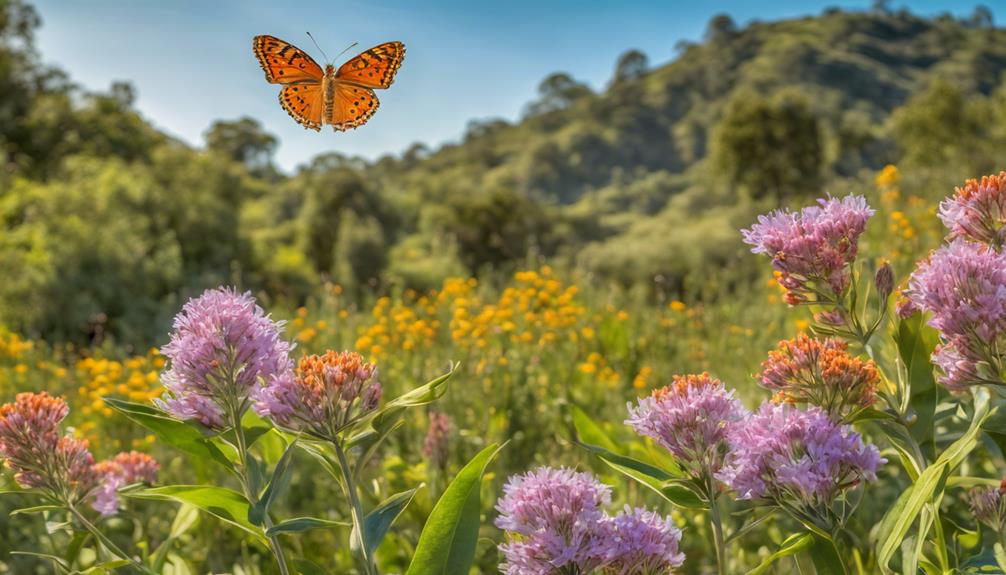
Monarch butterflies prosper in diverse environments such as prairies, meadows, grasslands, and roadsides. These habitats provide necessary resources for both the monarchs and their caterpillars. As a monarch enthusiast, you’d know that these butterflies heavily depend on milkweed, which is essential for survival. The caterpillars feed exclusively on milkweed, consuming its leaves to gain nutrients and toxins. These toxins constitute a significant part of the monarch’s chemical defense, making them unpalatable and harmful to many predators.
In these natural spaces, monarchs find not only milkweed but also an abundance of blooming plants. These flowers are crucial for adult monarch butterflies, supplying the nectar they need to sustain themselves. The monarch’s diet, consequently, revolves around accessing these key resources in their habitats. Monarch butterflies would struggle to survive and reproduce without the right plants, both milkweed for caterpillars and nectar flowers for adults,; formonarch butterflies to thrive, conserving and restoring these habitats is indispensable. Ensuring the presence of milkweed alongside diverse blooming plants in prairies, meadows, grasslands, and roadsides supports the entire life cycle of these remarkable insects. Your role in preserving these habitats is indispensable for their future.
Interesting Facts
Did you know these vibrant creatures are known for their incredible migratory journey? Monarch butterflies embarked on an astonishing migration, traveling up to 3,000 km to their wintering grounds. This journey isn’t just about distance; it reflects their unique traits and adaptability. The monarchs have varying lifespans, with some living just a few weeks, while the migratory generation can live up to eight months to complete their round-trip adventure.
One fascinating aspect of monarch butterflies is their mimicry with viceroy butterflies. This effective defense mechanism confuses predators, as both species share similar coloration, making it difficult to distinguish between them. Monarchs owe their unpalatability to milkweed plants, which they feed on during their larval stage. The toxins from these plants make them less appealing to predators.
Their striking orange and black coloration is a warning sign, signaling their toxicity to potential threats. Here’s a quick look at what makes monarchs so unique:
- Migration: Travel up to 3,000 km.
- Lifespan: Varies from weeks to months.
- Mimicry: Resemble viceroy butterflies for defense.
- Milkweed Plants: Source of their toxic defense.
These features highlight their remarkable survival strategies.
Conclusion
You’ve explored the fascinating world of Monarch Butterflies, marveling at their vibrant orange wings and unique survival tactics. You’ve seen how they rely on milkweed and brave a 3,000 km migration. Despite facing threats from habitat loss and declining populations, you’ve learned about the crucial conservation efforts underway. With your support, these incredible creatures can continue their journey, ensuring future generations witness their breathtaking migrations and contributions to biodiversity.
FAQs
1. What Are 5 Facts About Monarch Butterflies?
Monarch butterflies are fascinating as they migrate thousands of kilometers. Their life cycle depends on milkweed plants. Unfortunately, predators and habitat destruction threaten them. Conservation efforts like monarch tagging, festivals, and butterfly gardens help protect declining populations.
2. When a Monarch Butterfly Visits You?
When a monarch butterfly visits you, it embodies symbolic and spiritual significance. This unexpected encounter highlights its transformation symbolism, colorful beauty, and nature communication. Embrace the personal connection with this garden visitor, understanding its pollinator importance and migration patterns.
3. Is the Monarch Butterfly Endangered in 2024?
In 2024, monarch butterflies will face an endangered status due to habitat loss, climate change, and population decline. Conservation efforts aim to protect their migration patterns, sanctuaries, and genetic diversity, highlighting their ecological impact as pollinator species.
4. How Do You Tell if a Butterfly Is a Monarch?
To identify a monarch, observe its wing patterns and color contrast. Compare its size with others. Note its flight behavior, habitat preference, and migratory patterns. Check antenna shape. Remember, they rely on milkweed and face conservation challenges.