

Cultural Significance of the Spanish Language
You’re likely aware that the Spanish language is more than just a means of communication; it’s a crucial link to rich cultural traditions and historical narratives. Consider how it connects millions across continents, from Europe to Latin America, influencing everything from literature and cinema to social identity and unity. But have you considered how Spanish continues to be shaped by the world today? Its role in modern media and its diverse dialects keeps evolving, leaving you to ponder what this means for the future of Spanish-speaking communities. Are you curious about where this journey might lead?
Key Takeaways
- The Spanish language embodies centuries of history, showcasing profound cultural heritage and diversity.
- It facilitates understanding Hispanic cultures through literature, idiomatic expressions, and dialects.
- Spanish unifies 21 countries, fostering a shared cultural identity among over 470 million speakers.
- The language has significantly influenced global literature, visual arts, and cinema.
- Spanish-language media, including music and podcasts, enriches cultural experiences and promotes international unity.
Origins and Development

The Spanish language originates on the Iberian Peninsula and is rooted in Vulgar Latin. As you delve into its beginnings, you’ll find that it traces back to the 9th century in the northern coastal areas of Spain. This connection to Rome is pivotal because Spanish is a Romance language, which means it’s directly derived from Latin. The evolution of Spanish didn’t happen overnight; it was a gradual process that involved the development of various dialects.
Among these dialects, Castilian emerged as the most prominent and widely spoken. Its dominance began in the region of Castile, and it eventually spread across Spain. You might be interested to know that despite Spain being the language’s birthplace, it only accounts for about 12% of the world’s native Spanish speakers today.
Spanish’s journey from the Iberian Peninsula to becoming a major global language is a tribute to its adaptability and rich history. While you might think of Spain when you hear Spanish, remember that it’s spoken in 20 countries across four continents. This widespread use underscores its significance and how deeply it’s entrenched in global culture.
Global Influence and Spread
As you explore the global influence of the Spanish language, consider how its widespread adoption extends far beyond Spain’s borders. Spanish is an official language in 18 American countries, Puerto Rico, and Equatorial Guinea, showcasing its vast reach. With Mexico leading the charge, boasting approximately 110 million native Spanish speakers, the language’s presence is undeniable. This global influence is further amplified by large Spanish-speaking populations in Colombia and Argentina, contributing 41 million and 40 million speakers, respectively.
Around 38 million Spanish speakers in Spain make the country a pivotal hub for the language, infusing it with a rich cultural heritage that resonates worldwide. Beyond these borders, countries like Venezuela, Peru, and Chile have substantial Spanish-speaking populations, emphasizing the language’s role in shaping global communication and cultural exchange.
Understanding the Spanish language’s reach offers insight into its ability to connect diverse cultures and communities. As Spanish speakers grow, they foster a shared identity across continents. This linguistic unity transcends geographical boundaries, weaving a tapestry of rich cultural narratives highlighting the Spanish language’s enduring influence on the global stage. Embrace this linguistic journey and its profound impact.
Cultural Depth and Richness
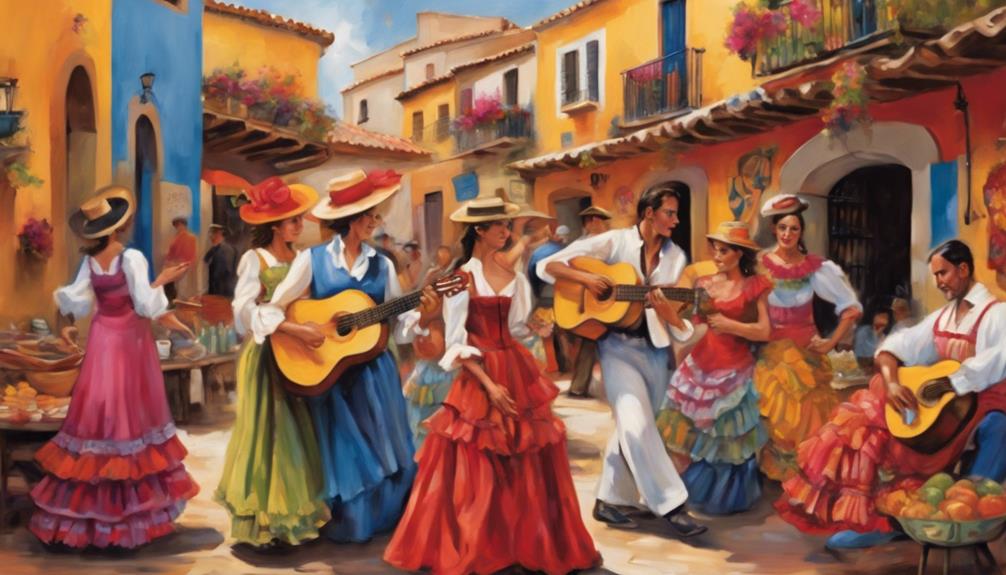
Plunge into the cultural depth and richness of the Spanish language, where centuries of history come alive through its words and expressions. You’ll find that each word, like “Spanish” and “hola,” carries a story rooted in ancient origins. The language’s grammar and syntax reflect a profound cultural heritage, allowing you to express a vast array of concepts and ideas in ways that are uniquely Spanish.
As you explore Spanish literature, you’ll discover how it serves as a cultural reference, revealing the soul of Hispanic cultures. Authors like Cervantes and García Márquez have used the language to create timeless works that resonate across generations. Their stories aren’t just tales; they’re windows into the past, providing insights into the rich tapestry of Spanish-speaking societies.
In the spoken language, idiomatic expressions and diverse accents add layers of cultural richness. Each phrase and pronunciation variation contributes to a vibrant linguistic mosaic, showcasing regional identities. By learning Spanish, you gain access to this cultural treasure trove. It’s a key to understanding the history and identity of Spain and Latin America, making it an invaluable tool for business, travel, and academia.
Social Impact and Identity
When you consider the global influence of the Spanish language, it’s clear how it shapes cultural identity and pride. Spanish isn’t just a means of communication; it’s a connection to rich histories and shared values across continents.
As you engage with this language, you embrace a vibrant tapestry that fosters unity and enriches your understanding of diverse cultures.
Spanish Language’s Global Influence
Spanish plays an essential role in shaping cultural identities and social dynamics worldwide. Its reach is vast and significant as an official language in 21 countries, including many Latin American nations. With over 470 million speakers, Spanish is the second most spoken language globally. This widespread use highlights its importance and underscores its influence in forming cultural connections and shared identities.
In Latin America, Spanish is more than a means of communication; it’s a cultural cornerstone. It threads through history and traditions, shaping societies and fostering unity among diverse groups. The number of speakers continues to rise, amplifying its impact on cultural and social structures within the region.
In the United States, Spanish’s popularity is growing. It offers access to a rich Hispanic cultural heritage and fosters deeper understanding among communities. It acts as a bridge, connecting people with a world of diverse experiences and perspectives.
Across continents, Spanish doesn’t just influence language but also serves as a significant force in social cohesion and cultural pride, enriching the global tapestry. Embrace its worldwide influence and the rich cultural narratives it supports.
Cultural Identity and Pride
With roots that run deep into the cultural heritage of Spanish-speaking countries, the Spanish language serves as a powerful emblem of cultural identity and pride. It has shaped the history and identity of Spain, offering a rich tapestry of cultural references, idiomatic expressions, and diverse accents. This richness reflects the deep cultural heritage of Spanish-speaking communities. Embracing the Spanish language connects you to a world where art, literature, music, and traditions in Latin America play crucial roles in daily life.
In the United States, Spanish is more than just a language; it’s a bridge that connects diverse communities, fostering cultural exchange and mutual understanding. As you learn Spanish, you’ll gain insights into the unique cultural nuances and historical depth that define Spanish-speaking countries. This journey enhances your linguistic skills and deepens your appreciation of a vibrant cultural identity.
Here’s a quick look at how the Spanish language influences cultural pride:
| Aspect | Impact | Cultural Significance |
|---|---|---|
| Art | Inspiration | Reflection of identity |
| Literature | Storytelling | Preservation of heritage |
| Music | Expression | Unifying force |
| Traditions | Continuity | Celebration of roots |
| Communities | Connection | Fostering unity |
Engaging with this language means embracing a rich source of pride and identity.
Popularity and Learning Benefits

Millions of people worldwide are captivated by the allure of the Spanish language, making it a popular choice for learners everywhere. With over 470 million speakers, it’s the second most spoken language globally. This widespread use isn’t just a statistic; it offers substantial learning benefits. As the official language in 21 countries, Spanish connects you to diverse Hispanic cultures, enhancing your global outlook. Whether for business, travel, or academia, understanding Spanish opens doors to numerous opportunities.
Learning Spanish is relatively easy for English speakers, so many choose it. The language’s structure and vocabulary share similarities with English, making the learning curve less steep. This ease of learning translates into tangible advantages, like improved job prospects and a broader international reach. Companies value bilingual employees who can communicate with Spanish-speaking clients and partners.
For those interested in deepening their knowledge, institutions like the University of Texas Permian Basin offer online graduate programs focusing on the Spanish language and culture. This access to advanced learning can further enhance your skills and understanding.
Embrace Spanish’s popularity and learning benefits, and you’ll enrich your personal and professional life.
Literary Contributions
Literature offers a timeless window into a language’s soul, and the Spanish language is no exception. Its rich history has produced literary works that resonate across centuries, shaping the cultural landscape worldwide.
Miguel de Cervantes’ “Don Quixote” is a monumental piece in the history of the Spanish language. It is often hailed as one of the greatest novels ever written. This masterpiece entertains and provides insight into Spanish society and values through its vivid characters and storytelling.
Pablo Neruda’s passionate and evocative poetry further enhances the Spanish language’s literary tapestry. His Nobel-winning verses capture profound emotions and have left a lasting impact on both Spanish and global literature. These works aren’t isolated; they reflect a tradition where Spanish phrases, idioms, and cultural references intertwine seamlessly, showcasing the language’s depth and richness.
Contemporary authors from Spanish-speaking countries continue this legacy, enriching global literature with diverse perspectives. Today’s literary scene is vibrant and ever-evolving, offering fresh narratives that build upon the storied history of the Spanish language.
- Cervantes’ “Don Quixote”: A cornerstone of Spanish literary history.
- Neruda’s Poetry: A profound contribution to world literature.
- Modern Authors: Enriching global narratives with Spanish flair.
Artistic and Visual Expressions

Spanish art’s vibrancy and diversity have captivated audiences globally, showcasing a rich tapestry of styles ranging from Baroque to contemporary visual arts. You can’t help but admire how the Spanish language weaves itself into these artistic expressions, enriching them with cultural depth. Legendary painters like Dalí, Sorolla, and Zuloaga have left an indelible mark on the art world, each contributing unique perspectives that continue to inspire. Their works reflect a harmonious blend of traditional influences and modern interpretations, making Spanish visual arts an invaluable repository of innovation.
Sculptors like Chillida have pushed the boundaries of creativity, shaping the evolution of visual arts with their groundbreaking techniques. Their sculptures often speak a universal language yet are deeply rooted in Spanish cultural narratives. This duality makes Spanish artistic expressions both relatable and uniquely intriguing.
The Spanish film industry adds another layer to this cultural richness. Directors like Buñuel and Saura have crafted cinematic masterpieces that explore the complexities of human experience, using the Spanish language as an essential tool for storytelling. Their films entertain and provoke thought, highlighting Spain’s diverse artistic landscape.
Dialects and Variations
When exploring Spanish’s cultural significance, you’ll notice how regional dialects add rich diversity, from Mexico’s vibrant expressions to Argentina’s distinct tone—Latin American Spanish sounds different from its European counterpart, showing phonological variations shaped by history. In places like the Canary Islands and the Philippines, unique dialects highlight how Spanish has adapted globally, while Castilian remains the most widely spoken.
Regional Dialect Differences
Across the Spanish-speaking world, regional dialect differences vividly illustrate the language’s rich cultural tapestry. The Spanish language thrives on its diversity, with regional dialects creating a vibrant mosaic of expression. For instance, Latin American Spanish, derived from Castilian, showcases this linguistic diversity.
Each country and even regions within countries add unique flavors to the Spanish language. You can hear distinct vocabulary, expressions, and intonations from Mexico to Argentina.
Exploring these regional dialects enriches your understanding of Spanish and provides a deeper appreciation for its global impact. As you travel through the regions where Spanish is spoken, you’ll notice how these dialects reflect cultural influences and historical contexts. The loss of the Latin case system, except for pronouns, is a shared trait, yet regional variations remain evident.
Here are a few key features contributing to the uniqueness of regional dialects:
- Vocabulary: Words such as “guagua” for bus in the Canary Islands and “autobús” in Spain can vary significantly.
- Verb System: Indicative, imperative, and subjunctive moods can differ subtly.
- Expressions: Colloquial phrases often carry local flair, reflecting cultural nuances.
Understanding these differences deepens your appreciation for the Spanish language’s global reach.
Phonological Distinctions Worldwide
Exploring phonological distinctions in Spanish dialects reveals a fascinating mosaic of sounds that define its global character. When you immerse yourself in the Spanish spoken in Spain, Latin America, or the Canary Islands, you’ll notice distinct differences that stem from a blend of cultural and historical influences. These variations in pronunciation, intonation, and accent reflect the diverse tapestry of the Spanish-speaking world.
You’ll find that differences in vowel sounds, consonant pronunciation, and stress patterns play a significant role in the richness of Spanish dialects. In Spain, the pronunciation of the “c” and “z” sounds can differ dramatically from the softer consonants in Latin America.
Meanwhile, you could encounter sounds influenced by the indigenous Guanche language in the Canary Islands.
Indigenous languages, historical events, and geographical isolation shape the phonological distinctions in Spanish dialects, all contributing to the language’s unique character. By understanding these distinctions, you enhance your language comprehension and deepen your cultural appreciation. Embracing the variety within Spanish dialects allows you to connect more authentically with the diverse communities that speak this vibrant language.
Spanish in Modern Media

Spanish has undeniably become a powerhouse in modern media, enchanting audiences worldwide with its vibrant and diverse offerings. As the second most spoken language globally, Spanish has a vast reach in the media landscape. Major Spanish-language media outlets like Univision and Telemundo are pivotal in shaping content for Hispanic audiences, providing news, entertainment, and cultural programming. These outlets not only serve native speakers but also attract a wider audience keen to explore diverse narratives.
Streaming platforms like Netflix have capitalized on the demand for Spanish-language content, offering many options that cater to various tastes. From gripping dramas to light-hearted comedies, these shows and movies present authentic stories that resonate with viewers from all walks of life. The success of Spanish-language films such as “Roma” and “Pan’s Labyrinth” further demonstrates their global appeal and critical acclaim.
In addition to film and television:
- Spanish-language music, including reggaeton and bachata, dominates international charts.
- Famous Spanish-speaking artists frequently collaborate with global stars.
- Spanish-language podcasts and radio shows are gaining popularity, offering fresh perspectives.
Embracing Spanish in modern media enriches your cultural experience and broadens your understanding of the world.
Unifying Spanish-speaking Nations
Although diverse in culture and geography, Spanish-speaking nations are united by their shared language, which is a powerful connector. The Spanish language emerged from the region of Spain and has become the first language for millions across 21 countries. As you explore these nations, you’ll notice how Spanish is a common bond, fostering a deep sense of belonging and cultural unity.
This shared language allows for seamless communication and cultural exchange, making it easier for people from different Spanish-speaking countries to understand and appreciate each other.
You’ll find that the Spanish language transcends geographical boundaries, promoting solidarity and strengthening connections between nations that might otherwise seem worlds apart.
As Spanish speakers, you’re part of a unique global community with a rich cultural tapestry. This language enables you to communicate with others and connects you to a shared history and identity.
It’s a powerful tool that bridges gaps between diverse cultures, reinforcing the sense of unity and identity among Spanish-speaking nations. Embrace this linguistic bond, and you’ll discover a world of collaboration, mutual respect, and cultural richness.
Conclusion
You’ve journeyed through the rich tapestry of the Spanish language, uncovering its origins, global influence, and cultural depth. Embracing Spanish connects you to a vibrant world of literature, art, and shared identity across nations. It enriches your understanding of diverse cultures and opens doors to new opportunities. By learning Spanish, you don’t just gain linguistic skills; you also become part of a global community united by the beauty and richness of a language that continues to inspire and unite.
FAQs
1. What Is the Significance of the Spanish Language?
Spanish’s global influence is undeniable. It connects you to diverse linguistic worlds, enhancing communication. By learning Spanish, you help preserve cultural identities, embracing a language that shapes history and fosters understanding across continents.
2. Why Is Language Important in Spanish Culture?
You see language as the heartbeat of Spanish culture. It drives communication and preserves tradition. Language’s importance lies in connecting people and passing down rich histories, ensuring that cultural heritage remains vibrant and deeply rooted in everyday life.
3. What Is the Cultural Significance of Language?
Language is culturally significant because it preserves cultural identity and history. Breaking communication barriers connects diverse communities, allowing shared traditions to flourish and ensuring cultural identity remains vibrant across generations.
4. What Is the Historical Significance of the Spanish Language in the United States?
You’ll discover the historical significance of the Spanish language in the U.S. through Spanish colonization, which influenced linguistic heritage. Embrace bilingual education to enrich understanding and appreciate Spanish’s deep-rooted impact on American culture and history.