

Food Differences Between Mexico and New York
When you explore the culinary landscapes of Mexico and New York, you’ll notice distinct differences shaped by cultural influences and ingredient availability. Mexico’s traditional dishes rely on fresh, locally-sourced ingredients, while New York’s vibrant food scene blends global flavors, often adapting dishes to American tastes. Authentic tacos in Mexico are simple yet flavorful, whereas New York’s versions offer elaborate toppings, reflecting the city’s dynamic nature. Curious about how these contrasts develop?
Key Takeaways
- Mexican cuisine emphasizes indigenous ingredients like corn, beans, and chili peppers, while New York features a global melting pot of flavors.
- Mexico relies on fresh, local ingredients, whereas New York often uses imported goods, especially in colder months.
- Traditional Mexican cooking methods contrast New York’s fusion cuisine, blending elements from various cultures.
- Authentic Mexican dishes use corn tortillas, while New York adaptations often include flour tortillas and diverse toppings.
- Mexico’s street food is affordable and traditional, while New York’s street offerings are pricier and often feature gourmet fusion dishes.
Cultural Influences on Cuisine
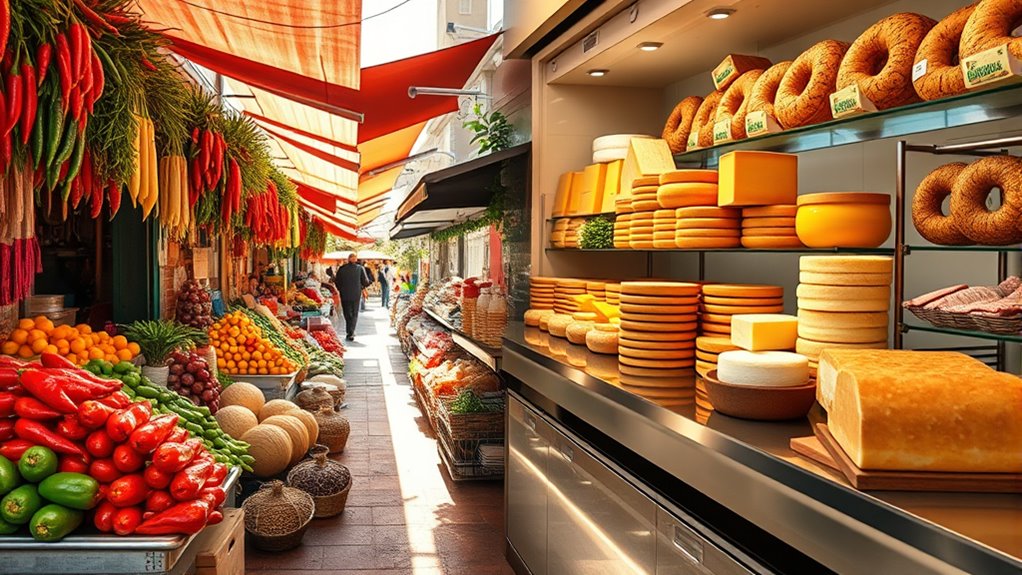
While exploring the cultural influences on cuisine, you’ll quickly notice the unique blend of traditions shaping Mexican and New York food scenes.
Mexican cuisine is deeply rooted in indigenous practices, with staples like corn, beans, and chili peppers taking center stage. Over time, the Spanish colonial influence introduced wheat and pork, integrating seamlessly into traditional Mexican dishes.
The vibrant culinary scene in New York reflects a global melting pot, embracing these traditional flavors while incorporating American ingredients.
Here, culinary practices adapt, creating modern interpretations of classic dishes. You’ll find Mexican-inspired tacos and burritos tailored for American tastes, showcasing a fusion of both worlds.
This evolution highlights how cultural influences shape diverse and dynamic food experiences.
Regional Ingredient Variations

When you explore the food scenes of Mexico and New York, you’ll notice how local ingredient availability shapes their culinary landscapes.
Mexico’s dishes are rich with indigenous ingredients like corn and avocados, while New York’s cuisine benefits from its diverse immigrant influences and offers a vast array of global flavors. How each region adapts and incorporates these ingredients highlights the unique culinary evolution driven by their distinct environments and cultures.
Local Ingredient Availability
Given the vibrant culinary landscape, Mexico thrives on local ingredients like corn, beans, and chili peppers, which are essential to its traditional dishes.
The availability of local ingredients in Mexico allows you to enjoy meals bursting with fresh ingredients and authentic Mexican flavors. Fresh herbs and spices, such as cilantro and epazote, enhance the culinary experience, offering a taste deeply rooted in the region’s soil.
In contrast, New York’s kitchens often rely on imported goods, especially during the colder months when local produce is scarce.
While New York boasts a diverse culinary scene, it can’t always match the freshness of Mexican ingredients. The reliance on imported produce and processed alternatives, like flour tortillas, shows distinct ingredient availability differences.
Culinary Influence and Adaptation
Mexican cuisine thrives on the vibrancy of its local ingredients, such as corn, beans, and various chili peppers, crafting traditional dishes that are both flavorful and authentic.
When you explore New York’s culinary scene, you’ll notice the influence of its diverse immigrant population. This results in a fusion of flavors that often diverge from authentic Mexican food.
New York’s adaptation of Mexican cuisine frequently incorporates processed ingredients like canned vegetables and yellow cheese, which are common in Tex-Mex cuisine.
You’ll also find dishes modified to suit American tastes, with larger portions and flour tortillas replacing traditional corn.
The blend of cultures in New York creates unique hybrid dishes like burritos and fajitas, showcasing regional ingredient variations and culinary influence.
Traditional Mexican Cooking Methods

While exploring traditional Mexican cooking methods, you’ll discover a rich tapestry of techniques highlighting the country’s culinary heritage.
Fundamental practices include:
- Using a Comal: This flat griddle is essential for heating corn tortillas and cooking with chili peppers, emphasizing corn’s significant role in Mexican cuisine.
- Tamale Preparation: Ingredients are steamed in banana leaves or corn husks, showcasing the use of local resources and preserving age-old traditions.
- Crafting Salsas: A molcajete, a stone mortar and pestle, grinds fresh ingredients, creating vibrant salsas that enhance any dish.
- Slow-Cooking Techniques: Methods like barbacoa and simmering dishes like pozole allow flavors to meld, reflecting indigenous traditions and delivering rich, complex tastes.
New York’s Fusion Cuisine
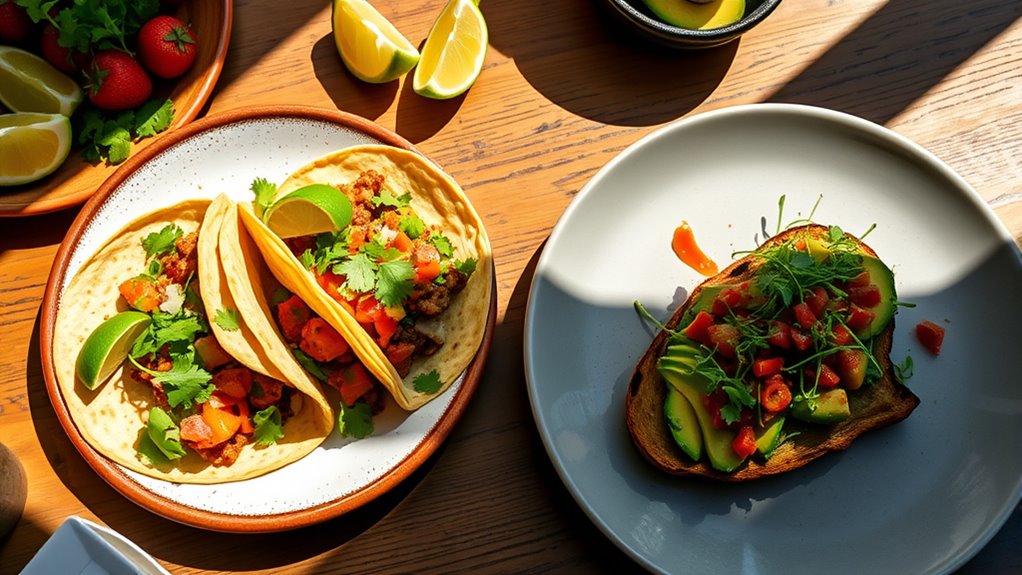
As you explore the vibrant culinary landscape of New York, you’ll find a fascinating contrast to traditional Mexican cooking methods. The city’s fusion cuisine reflects its diverse immigrant population, blending elements from Mexican, Italian, Chinese, and more into unique dishes.
You’ll encounter tacos filled with unexpected ingredients like Korean BBQ or sushi, highlighting this creative food fusion. Restaurants such as Dos Toros and Tacombi are hotspots for Mexican-inspired fusion dishes, attracting both purists and adventurers alike.
New Yorkers often merge Mexican flavors with local ingredients. Imagine avocado toast with salsa verde or burrito bowls featuring pickled red onions and artisanal cheeses.
Food trucks and pop-up eateries further this trend, allowing chefs to experiment with Mexican ingredients in a fast-casual format.
Evolvement of Tex-Mex
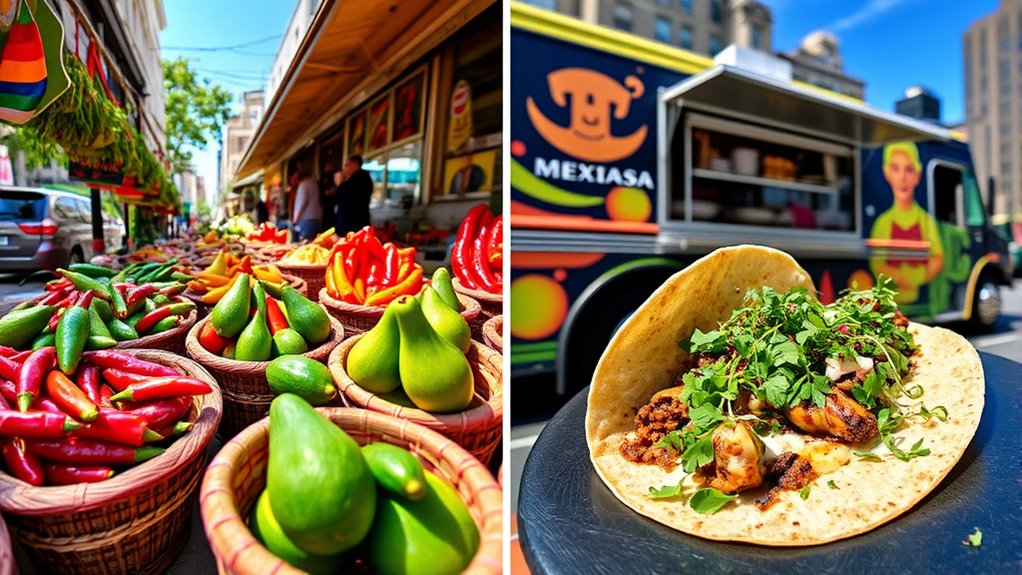
Though Tex-Mex might seem like a straightforward blend of Mexican and American flavors, its evolution tells a richer cultural fusion and adaptation story.
Emerging in Texas, Tex-Mex draws from both Mexican culinary traditions and Southern U.S. influences, fueled by the Tejano community.
You’ll notice it diverges from authentic Mexican food in several ways:
- Wheat Flour Tortillas: Unlike the corn tortillas of traditional Mexican dishes, Tex-Mex uses wheat flour.
- American Ingredients: Expect yellow cheese and beef, adding to its unique taste.
- Simpler Flavor Profiles: Heavy seasoning contrasts with the complexity of Mexican culinary flavors.
- Fast Food Influence: Chains like Taco Bell popularized these dishes, using various ingredients to make them globally accessible.
Tex-Mex celebrates bold flavors and accessibility.
Authentic vs. Adapted Dishes
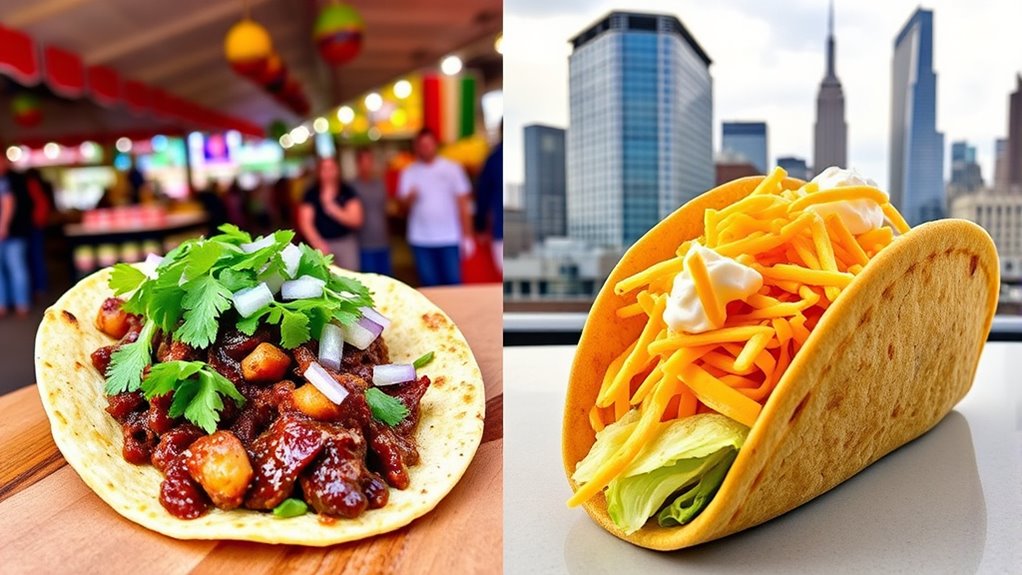
You’ll find a striking contrast between authentic Mexican dishes and their adapted counterparts in New York when exploring the culinary landscape.
Authentic Mexican dishes rely on corn tortillas, beans, and chili peppers. In contrast, New York’s adaptations often incorporate flour tortillas and processed cheese, reflecting American food preferences.
Tacos in Mexico are simple, featuring corn tortillas, while New York Mexican restaurants serve them with elaborate toppings. Burritos in New York are larger and packed with diverse fillings, differing from their simpler Mexican counterparts.
Similarly, while fajitas might sizzle in the U.S., they’re less common and more straightforward in Mexico.
Even quesadillas show this difference. In Mexico, they are typically made with corn tortillas, but in New York, they are made with flour tortillas and varied fillings.
Dining Experiences in Mexico City vs. New York

When you explore the dining experiences in Mexico City versus New York, you’ll notice a fascinating contrast in culinary diversity and street food culture.
Mexico City’s vibrant street food scene offers authentic tacos and quesadillas, while New York’s food trucks serve a global mix of dishes, from fusion dishes to classic American favorites.
Both cities offer unique experiences, with Mexico City emphasizing traditional flavors and New York showcasing an eclectic culinary landscape.
Culinary Diversity Comparison
While Mexico City and New York boast an impressive variety of dining options, each city presents a unique culinary landscape reflecting its cultural heartbeat.
New York’s culinary diversity thrives on global influences, with fine dining experiences and American fusion dishes at every corner.
Mexican food is usually steeped in tradition, embracing indigenous ingredients and authentic recipes.
Here’s how you can savor the best of both worlds:
- Explore New York’s Global Cuisines: Over 24,000 restaurants offer everything from sushi to Italian bistros.
- Indulge in Fine Dining: Treat yourself to a Michelin-starred meal, a staple of New York’s upscale scene.
- Taste Authentic Mexican Flavors: Discover family-run eateries in Mexico City, where history is served on every plate.
- Appreciate Affordability: Enjoy affordable meals in Mexico City, with an average cost of just $9.50.
Street Food Culture
Mexico City and New York each offer unique street food experiences that reflect their vibrant cultures.
In Mexico City, street vendors serve authentic Mexican dishes like tacos, tamales, and elotes. These meals, steeped in the history of Mexican food, often use family recipes and fresh ingredients and cost just $1 to $3. You’ll find vendors on every corner, providing a casual and accessible dining atmosphere.
Conversely, food in the United States, particularly New York, showcases a diverse street food scene with food trucks and carts. These serve everything from halal food to gourmet fusion dishes, reflecting the city’s multicultural vibe.
New York street food commands higher prices, averaging $10 to $15, and adheres to stricter health regulations. It offers trendy yet safe dining experiences.
Popularity and Commercialization of Mexican Food

As Mexican food continues to captivate American palates, its popularity and commercialization have reached impressive heights. Fast-food chains like Taco Bell have played a vital role in spreading Mexican food, boasting over 8,200 restaurants worldwide.
Tex-Mex is a delicious fusion of Mexican and Southern U.S. cuisines. Itffers simpler flavors and casual dining vibes. Early commercialization efforts, such as Gebhardt’s chili powder, brought Southwestern dishes like chili and tacos into the national spotlight.
Here’s how you can enjoy this trend:
- Explore Tex-Mex: Try staples like nachos and burritos.
- Visit Fast Food Chains: Experience quick Mexican-inspired meals.
- Indulge in Fine Dining: Savor authentic dishes from Michelin-starred chefs.
- Embrace Hybrid Foods: Discover innovative blends at places like Chipotle.
Conclusion
Exploring the food differences between Mexico and New York reveals how cultural influences and ingredient availability shape each region’s culinary identity. In Mexico, you savor the authenticity of traditional cooking methods and fresh, local ingredients. Meanwhile, New York offers a dynamic fusion of global flavors, adapting dishes like tacos with creative twists. As you dine, you appreciate the evolution of Tex-Mex and the commercialization of Mexican cuisine, experiencing unique dining adventures in Mexico City and New York.
FAQs
1. What Is Different About Mexican Food?
Mexican food uses local ingredients like corn and chili peppers, emphasizing complex flavors and traditional techniques. Dishes reflect regional customs, with staples like corn tortillas and authentic street food offering unique culinary experiences you can’t miss.
2. What Is the Difference Between New Mexico Food and Mexican Food?
New Mexico food uses local ingredients like green and red chile, integrating Native American influences with blue corn tamales. Mexican food emphasizes fresh ingredients like corn and beans, with lighter, varied dishes.
3. What is Mexico’s food culture?
Mexico’s food culture is rich in tradition and emphasizes fresh, local ingredients. It’s deeply communal, with meals often celebrating family and festivals. Techniques like nixtamalization enhance flavors, while mole and tamales showcase regional diversity.
4. What Are Some Similarities and Differences Between Mexican and Spanish Food?
Both Mexican and Spanish cuisines use corn, beans, and meat, but Mexican dishes burst with chili peppers and cilantro, while Spanish meals highlight olive oil and seafood. Each offers unique dining experiences through distinct flavors and preparation styles.