

History of San Luis Potosi: From Colonial Era to Modern Times
Imagine walking through San Luis Potosi, a region where history whispers from every corner, from the echoes of indigenous tribes to the remnants of Spanish colonization. You might find it intriguing how a city founded amid a gold rush in 1592 became a cornerstone of Mexico’s fight for independence. The mining boom didn’t just bring wealth; it forged a unique cultural tapestry. So, what exactly connects the colonial influence to modern urban growth? Exploring this connection might reveal how past events unexpectedly shape the region’s present and future.
Key Takeaways
- San Luis Potosi was founded in 1592 due to a gold rush attracting Spanish settlers.
- The region played a key role in the Mexican Independence Movement and Revolution.
- Its economy historically thrived on silver mining, influencing its architectural and cultural development.
- The city showcases a mix of indigenous and Spanish colonial heritage through its structures and festivals.
- Modern growth is evident with industrial development and institutions like the Autonomous University of San Luis Potosi.
Pre-Columbian Era

In the rich tapestry of San Luis Potosi’s history, the pre-Columbian era stands out with vibrant Indigenous cultures like the Otomi and Chichimeca tribes. As you explore this fascinating period, you’ll discover how these indigenous tribes shaped the region long before Spanish colonizers arrived.
The Otomi were among the early settlers, establishing communities that thrived on agriculture and trade. Meanwhile, the Chichimecas, known for their warrior spirit, played a significant role in the region’s history.
The Chichimeca War lasted from 1550 to 1590 and was a notable conflict in which the fierce Chichimeca defended their land against external forces. This war reflects their resilience and determination to protect their heritage.
In the eastern part of San Luis Potosi, the Huastecos, another indigenous tribe, have contributed to the rich cultural mosaic. They speak a variant of the Mayan language and have maintained a distinct cultural identity through the centuries.
Early settlements like Villa de San Esteban, established in 1522, were influenced by interactions between the Spanish and these indigenous groups. Understanding these dynamics offers deeper insight into San Luis Potosi’s ancient heritage.
Spanish Colonization
As you explore the Spanish colonization of San Luis Potosi, you’ll notice that early settlements like Matehuala and Charcas played an essential role in the area’s development.
The Chichimeca resistance presented challenges, but Alonso Manrique de Zuniga‘s peace negotiations in 1585 helped stabilize the region.
These efforts laid the groundwork for the expansion of settlements and the spread of Roman Catholicism, evident in the region’s many churches and cathedrals.
Early Spanish Settlements
Spanish colonization in San Luis Potosí began with a mix of resistance and negotiation. Spanish settlers faced fierce opposition from indigenous populations, particularly during the Chichimeca War. This conflict, lasting from 1550 to 1590, marked a turbulent period as settlers attempted to establish early settlements.
Despite the challenges, peace negotiations played an essential role. In 1585, Alonso Manrique de Zúñiga introduced a purchasing policy to ease tensions and foster cooperation with the Chichimeca leaders. These negotiations facilitated the establishment of early settlements in places like Matehuala, Charcas, and San Luis Potosí.
Viceroy Luis de Velasco II and the Franciscans spearheaded efforts to integrate and evangelize the indigenous populations spearheaded efforts to integrate and evangelize the indigenous populations. They aimed to bring about cultural and religious transformation, which often smoothed the way for Spanish settlers.
Meanwhile, Hernan Cortes’s earlier attempt to establish control in the region through founding Villa de San Esteban in 1522 after encountering resistance from the Huastecos in Pánuco set a precedent for future endeavors.
Establishing these early settlements was a complex process that balanced negotiation and confrontation as the Spanish sought to solidify their presence amidst persistent indigenous resistance.
Chichimeca Resistance and Peace
The fierce Chichimeca resistance from 1550 to 1590 posed a formidable challenge to Spanish colonization efforts in San Luis Potosí. Despite Hernán Cortés’ earlier victory over the Huastecos in 1522 and the founding of Villa de San Esteban, the Chichimeca people fiercely defended their lands. They resisted Spanish encroachment, making it difficult for settlers to establish control.
To address this, Alonso Manrique de Zúñiga played a pivotal role in shifting the approach from conflict to diplomacy. 1585, he implemented a peace policy by negotiating directly with Chichimeca leaders, marking a significant turning point. Villamanrique, another key figure, furthered these negotiations in the late 16th century. By engaging with the Chichimeca, they hoped to bring stability to the region and facilitate Spanish colonization.
Additionally, the evangelization efforts of Viceroy Luis de Velasco II and the Franciscans were vital in this process. They aimed to integrate the Chichimeca into the Spanish colonial framework through religious conversion and cultural assimilation. These efforts not only contributed to the expansion of Spanish settlements but also laid the groundwork for a more peaceful coexistence between the colonizers and the indigenous people in San Luis Potosí.
Founding of San Luis Potosi
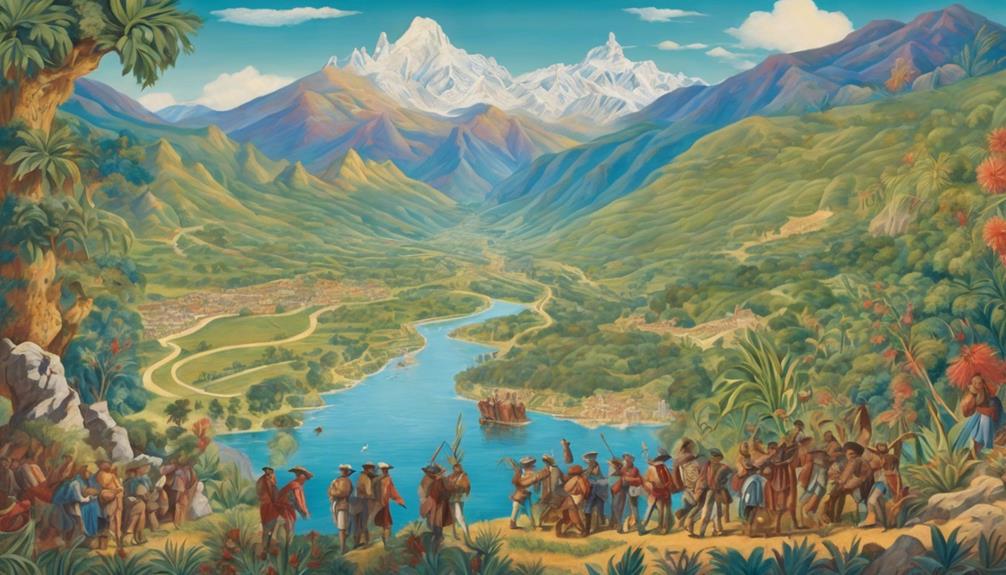
Many know San Luis Potosi for its rich history rooted in the gold rush of 1592. The city’s founding is attributed to the discovery of precious metals, which drew settlers and adventurers to the region. The emerging mining community was largely influenced by Franciscan priests, who played a significant role in its establishment as early as 1539. By the time the gold rush hit, the groundwork for San Luis Potosi as a vibrant hub had already been laid.
You’ll find that its name, “Potosi,” was chosen to reflect the presence of abundant gold and silver mines reminiscent of the renowned mines in Potosí, Bolivia. This naming reflected the city’s promise of wealth and prosperity through mining.
The Franciscan priests not only facilitated the development of the mining community but also left a lasting mark on its architecture and culture. With their influence, San Luis Potosi became known for its concentration of cathedrals and churches, showcasing the deep roots of Roman Catholicism in the area.
Mining Boom
Gold fever swept through San Luis Potosi in 1592, sparking a mining boom that transformed the region overnight. As a prospector, you’d find yourself drawn to the promise of untold riches beneath the earth.
The discovery of gold led to a rapid influx of miners and settlers, turning the area into a bustling hub of activity. You’d witness the land change as prospectors dug deep, uncovering gold and setting the stage for future discoveries.
Colonial Influence
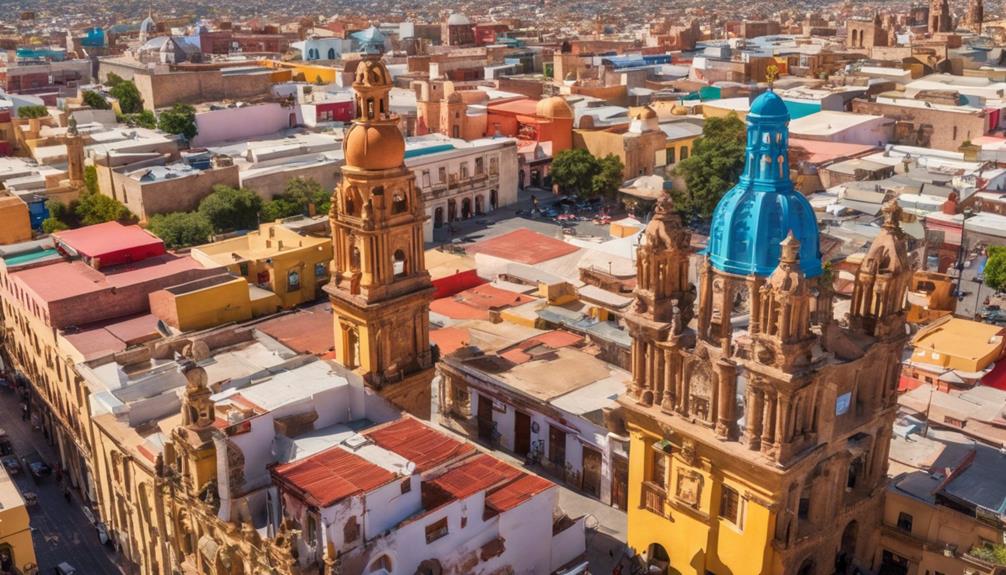
As you explore San Luis Potosi’s colonial influence, you’ll notice its roots in the Spanish missionary foundations established in 1583.
The city’s prosperity was largely driven by its involvement in mining, which fueled significant economic growth during the colonial era.
Today, San Luis Potosi’s architectural legacy, with its beautifully preserved churches and historic buildings, proves its rich colonial past.
Spanish Missionary Foundations
The foundation of San Luis Potosi in 1583 as a Franciscan mission marks a pivotal moment in the Spanish colonial influence in the region. Spanish missionaries arrived with a clear purpose: to evangelize indigenous populations. They established the Franciscan mission as a spiritual and cultural hub, transforming the region’s social landscape. Their work wasn’t just about spreading religion; it laid the groundwork for a new architectural heritage that still defines the city today.
As you stroll through San Luis Potosi, you’ll notice the striking Spanish Baroque style the early missionaries favored. The ornate churches and religious landmarks reflect this intricate design, showcasing the Franciscan influence that permeates the city. These structures aren’t just buildings; they reflect the Spanish missionaries’ lasting impact, blending European artistry with local traditions.
Mining and Economic Growth
Mining booms transformed San Luis Potosi into an economic powerhouse during the colonial era, driven primarily by its abundant silver deposits discovered in 1546. This discovery positioned the city as a significant mining hub, attracting settlers and investors enthusiastic to exploit its rich mining resources. Silver wasn’t the only treasure; gold, lead, and copper contributed to the region’s wealth. As a result, San Luis Potosi experienced substantial economic prosperity, becoming a crucial part of the colonial economy.
The mining industry was the backbone of San Luis Potosi’s economic growth, supporting colonial government activities and fortifying Mexico’s military endeavors. During conflicts like the Mexican-American War in 1846, the resources extracted from the city’s mines were essential in arming and sustaining the military. This period of prosperity wasn’t just about wealth; it laid the foundation for future industrial development in the city.
Thanks to its rich mining resources, San Luis Potosi’s economy flourished, setting the stage for its transformation into an industrial center.
The colonial influence of mining nurtured an environment ripe for economic success. These historical developments continue to shape the region’s identity and economic trajectory today.
Architectural Legacy Preserved
Wandering through San Luis Potosi, you’re immediately struck by its vibrant colonial architectural heritage. The city is a tribute to neoclassical and baroque design, with each colonial building telling a story of its rich past.
As you explore, you’ll encounter stunning cathedrals, museums, and churches, each showcasing ornate architectural details reflecting European and Latin influences.
The Metropolitan Cathedral, with its intricate facade and towering presence, is an architectural gem that highlights this blend. Meanwhile, the Museo Regional Potosino, with its vibrant colors and detailed designs, offers another glimpse into the city’s architectural legacy.
These landmarks aren’t just buildings; they’re gateways to the past, inviting you to immerse yourself in the history and culture of San Luis Potosi.
Every corner you turn, there’s something to marvel at, whether the detailed baroque carvings or the elegant lines of neoclassical forms. These colonial buildings have been carefully preserved, allowing you to step back in time and experience the grandeur of a bygone era.
San Luis Potosi’s architectural heritage isn’t just preserved; it’s alive and vibrant, waiting for you to discover.
Mexican Independence Movement
San Luis Potosi is a pivotal player in the Mexican independence movement, serving as a strategic hub for political activities and uprisings. This city became a focal point for those seeking to challenge oppressive regimes and push for freedom. Francisco Madero, a key figure in this movement, penned the influential Plan of San Luis Potosi in 1910, calling for overthrowing the dictator Porfirio Díaz. This document ignited the spirit of rebellion and underscored the city’s importance in the broader struggle for independence.
Here’s why San Luis Potosi’s role was so significant:
- Strategic Location: Its position made it ideal for organizing and launching uprisings against colonial and oppressive forces.
- Political Hotspot: The city buzzed with political activities, serving as a meeting place for revolutionaries and thinkers.
- Birthplace of Ideals: Key documents like Madero’s plan were crafted here, inspiring movements nationwide.
- Legacy of Resistance: San Luis Potosi remained a symbol of ongoing resistance against oppressive regimes even after independence.
Your understanding of Mexico’s journey toward freedom is incomplete without recognizing San Luis Potosi’s important contributions.
Role in the Mexican Revolution
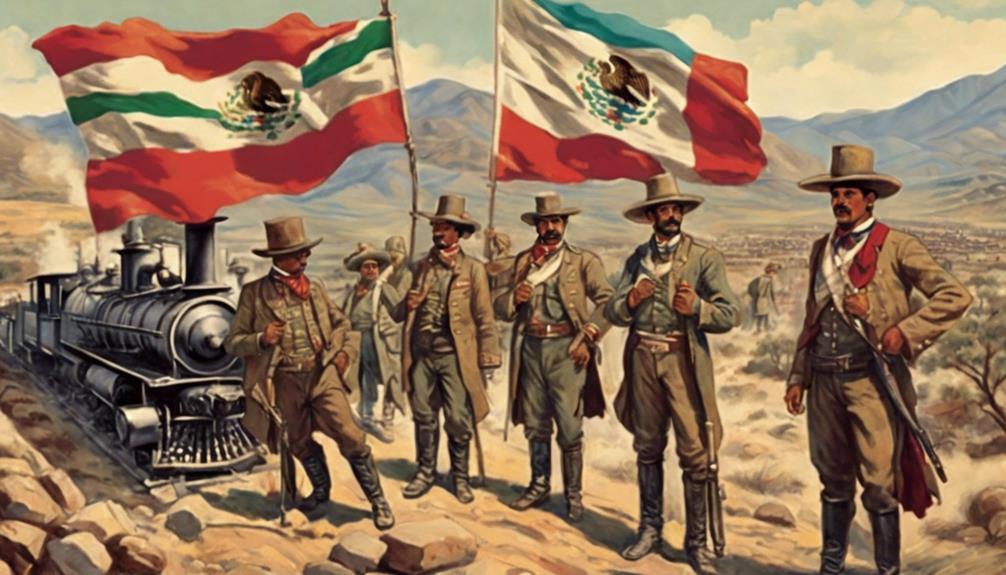
You’ll discover that San Luis Potosi was pivotal during the Mexican Revolution, beginning with Francisco Madero’s Plan of San Luis Potosi.
This plan called for an armed uprising, setting the stage for vital battles that reshaped the nation’s political landscape. Recognizing its strategic importance, the region’s support was instrumental in challenging and eventually overthrowing the Porfirio Diaz regime.
Francisco Madero’s Revolutionary Plan
The spark of the Mexican Revolution can be traced back to Francisco Madero’s Plan of San Luis Potosí, a bold manifesto that challenged the authoritarian grip of Porfirio Díaz. Issued on October 5, 1910, this revolutionary document called for an uprising against Díaz’s oppressive regime. Madero’s plan wasn’t just a call to arms but a demand for democracy, fair elections, land reform, and social justice. This powerful call resonated deeply with Mexicans, igniting a nationwide movement.
To better understand the significance of the Plan of San Luis Potosí, consider these key points:
- Revolutionary Document: The plan marked the beginning of the Mexican Revolution, setting the stage for a nationwide struggle.
- Call to Action: It urged citizens to rise on November 20, 1910, to overthrow Díaz, aiming to restore democracy.
- Widespread Support: The emphasis on fair elections and social reform attracted massive support across Mexico.
- Catalyst for Change: The plan ultimately led to Porfirio Díaz’s ousting and the establishment of a new government.
Pivotal Revolutionary Battles
Amidst the upheaval of the Mexican Revolution, the strategic importance of San Luis Potosi‘s location became undeniable. Its industrial and mining prominence made it a focal point for revolutionary forces. General Francisco Madero‘s Plan of San Luis Potosi, proclaimed in 1910, ignited the uprising against the long-standing Porfirio Diaz regime. This plan wasn’t just a call to arms; it positioned San Luis Potosi as a central hub for the revolutionaries, drawing key figures such as Pancho Villa and Venustiano Carranza.
Imagine the intensity of battles waged in this region, particularly the Battle of San Pedro de las Colonias. This confrontation underscored the local commitment to the revolutionary cause and demonstrated the strategic understanding of leaders like Villa and Carranza. Their operations in San Luis Potosi galvanized support and resources, ultimately contributing to Diaz’s downfall.
As you explore the revolution’s history, you’ll see how San Luis Potosi’s role was instrumental in reshaping Mexico.
The battles fought here weren’t just military engagements but turning points that helped steer the nation toward a new government and a hopeful future.
Impact on National Politics
Considering the strategic battles that unfolded in San Luis Potosi during the Mexican Revolution, it becomes clear that their outcomes left a significant imprint on national politics. This city wasn’t just any location; it was the birthplace of Francisco Madero’s critical Plan of San Luis Potosi in 1910. This document called for armed rebellion against Porfirio Diaz’s regime and catalyzed political unrest and revolutionary activities across Mexico. San Luis Potosi’s strategic location and historical significance made it an essential center for these transformative events.
Here’s how San Luis Potosi impacted national politics:
- Francisco Madero’s Plan: The Plan of San Luis Potosi was instrumental in galvanizing the nation, leading to the overthrow of Diaz’s long-standing dictatorship.
- Political Unrest: The city became a hub for political unrest, drawing attention to the need for change and reform in Mexican society.
- Revolutionary Activities: It was a breeding ground for revolutionary activities, shaping the future socio-political landscape of Mexico.
- National Influence: The revolutionary movements from San Luis Potosi had a lasting impact, setting the stage for Mexico’s future political trajectory.
San Luis Potosi’s role in the Mexican Revolution was undeniably critical.
Economic Development
San Luis Potosi boasts a diverse economy where manufacturing, agriculture, and mining industries each play vital roles. Mining operations, especially silver mining, are essential here. This has spurred economic development, making San Luis Potosi an attractive hub for investors and businesses.
The manufacturing sector accounts for 26% of the economy, with industries like food processing, automobile manufacturing, and textiles driving growth. These industries generate revenue and provide numerous job opportunities for locals.
Agriculture has long been a staple in San Luis Potosi, supporting about 20% of the population. The region’s fertile lands produce a variety of fruit crops, including oranges, mangoes, and bananas, which are indispensable for local consumption and export. This traditional activity continues to be a backbone for many families, offering sustenance and employment.
Cultural Heritage

Immerse yourself in San Luis Potosi’s rich cultural heritage, where history and tradition come alive through its stunning architecture and vibrant festivals. Wander the cobblestone streets and marvel at the historical churches and colonial buildings that showcase the city’s Spanish Baroque-style architecture.
These structures aren’t just beautiful; they tell stories of a past where Spanish and indigenous cultures merged. The coat of arms of San Luis Potosi, depicting San Luis Rey, symbolizes this unique fusion.
To explore the city’s artistic past further, visit the Museo Nacional de la Máscara. This museum offers an intriguing collection of masks, highlighting the region’s cultural heritage and traditions. The city’s colonial center has been preserved meticulously, allowing you to step back in time.
Here are four cultural treasures you shouldn’t miss:
- Explore the historical churches with their intricate designs.
- Admire the colonial buildings that line the streets.
- Discover the Spanish Baroque-style architecture that defines the cityscape.
- Visit the Museo Nacional de la Máscara for an in-depth exploration of San Luis Potosi’s artistic history.
Each of these experiences enriches your understanding of the city’s vibrant cultural tapestry.
Modern Growth and Urbanization
Over the past decade, San Luis Potosi has seen a remarkable surge in its population and urban landscape. Between 2010 and 2020, the city’s population soared from 722,772 to 845,941, while the metro area expanded from 1,040,443 to 1,271,366 residents. This population growth reflects San Luis Potosi’s dynamic urban development and pivotal role in Mexico’s economic activities. Known for its strong industrial sector, the city thrives on manufacturing, metal smelting, and oil refining.
San Luis Potosi’s strategic location enhances its appeal as an industrial hub. Well-connected highways, efficient railroads, and a bustling international airport facilitate the seamless movement of goods and people, further fueling its economic growth.
The city’s rich mining industry and the presence of the Autonomous University of San Luis Potosi also contribute to its robust economic landscape.
As a major center for urban development, San Luis Potosi balances its historical significance with modern advances. Its cultural landmarks coexist with a booming industrial economy, making it an evolving urban center. You’ll find a city that embraces its heritage and future, capturing the essence of growth and transformation.
Conclusion
You’ve journeyed through San Luis Potosi’s rich history, from its indigenous roots to its vibrant present. You’ve seen how Spanish colonization and the mining boom shaped its economic landscape and architectural beauty. The city was pivotal in the Independence Movement and Mexican Revolution, influencing Mexico’s socio-political fabric. Today, you can still feel its cultural heritage while witnessing its dynamic growth and urbanization. San Luis Potosi continues to thrive, honoring its past while embracing the future.
FAQs
1. Is San Luis Potosí Mayan or Aztec?
You might think San Luis Potosí is Mayan or Aztec, but it’s not. Its indigenous influences come from groups like the Chichimecas and Huastecas, with cultural connections, architectural similarities, historical roots, and artistic representations unique to them.
2. Why Is San Luis Potosí Famous?
San Luis Potosí is famous for its silver mining legacy and stunning colonial architecture. Experience vibrant cultural festivals celebrating Huastec culture. The city thrives with modern industry, making it a dynamic blend of past and present.
3. What Is San Luis Potosí in Ancient History?
You’ll explore San Luis Potosí’s ancient history by examining indigenous settlements that thrived before the Spanish conquest. The colonial era shaped its cultural heritage, with the mining industry playing a pivotal role in the region’s development and identity.
4. What Are Some Interesting Facts About San Luis Potosí?
San Luis Potosí’s colonial architecture is stunning and reflects its rich silver mining history. Immerse yourself in Indigenous culture and vibrant cultural festivals. Explore breathtaking natural landscapes that make this region an unforgettable destination. Don’t miss it!