
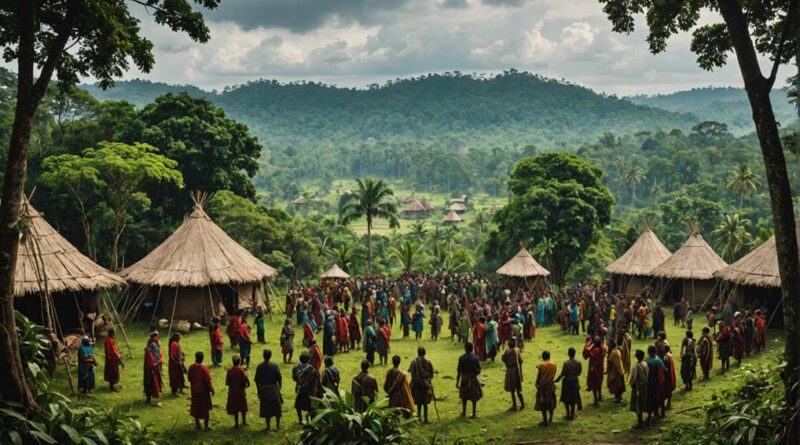
The Political Situation in Chiapas, Mexico
Chiapas, Mexico, is at the heart of a complex political narrative where indigenous rights and government actions collide. The Zapatista uprising in 1994 was just the beginning, highlighting deep-seated issues that still simmer today. Imagine a landscape where government strategies disrupt traditional ways, creating instability and unrest. Land disputes and a lack of basic services add further layers to this intricate puzzle. How do religious groups and international voices shape the ongoing dialogue? As you ponder these elements, it is crucial to question what the future holds for Chiapas amidst these enduring challenges.
Key Takeaways
- Chiapas hosts Mexico’s largest indigenous population, facing ongoing land rights and autonomy conflicts.
- The Zapatista Army of National Liberation (EZLN) advocates for indigenous rights and challenges government policies.
- Government strategies often exclude indigenous input, undermining traditional governance and escalating tensions.
- Unresolved land conflicts and political violence persist, with indigenous communities forming self-defense groups.
- Media coverage and international advocacy amplify indigenous struggles, pressuring the Mexican government for change.
Historical Background of Chiapas
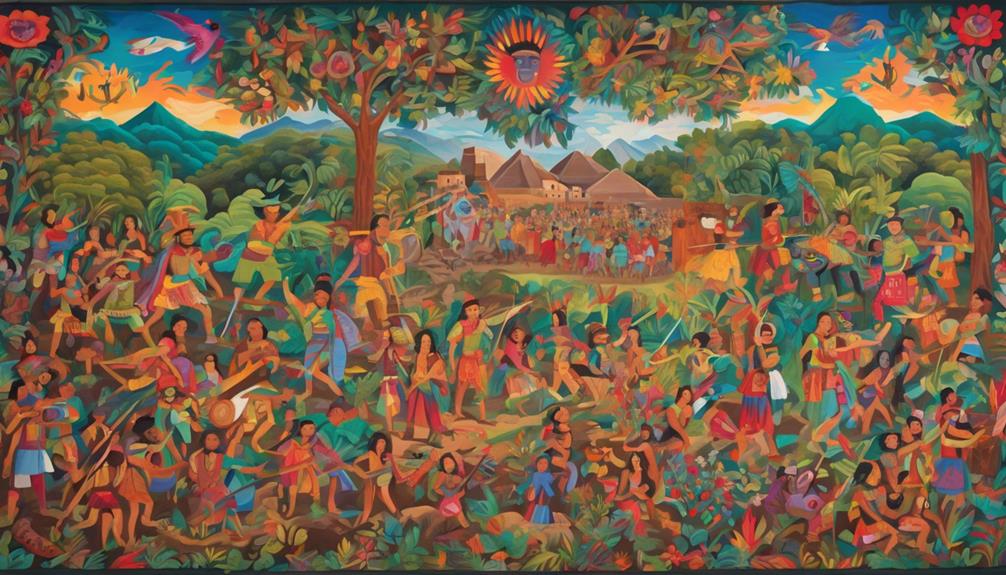
Chiapas, a region rich in cultural and historical significance, has long been a focal point for indigenous rights in Mexico. As you explore its history, you’ll find that Chiapas hosts the largest indigenous population in the country, with 1.1 million indigenous people. This has been central to the region’s ongoing land and social rights struggles.
The Mexican Revolution of 1910 marked a pivotal moment, leading to indigenous groups in Chiapas gaining legal rights to communal land. However, this victory also sparked continuous conflicts over land and resources, which remain unresolved today.
In 1994, the Zapatista Army of National Liberation (EZLN) emerged in Chiapas, amplifying the fight for indigenous rights and autonomy. Their actions highlighted the tension between the region’s indigenous communities and the Mexican government. The government’s response included aligning laws with NAFTA and maintaining a significant military presence to control the situation.
Conflicts over land rights persist despite passing indigenous laws that recognize cultural diversity. As you explore Chiapas’ historical background further, you’ll see that these struggles for land and social rights have roots deeply intertwined with the legacy of the Mexican Revolution.
Indigenous Rights and Movements
The struggle for Indigenous rights in Chiapas has been a defining aspect of the region’s socio-political landscape, particularly since the emergence of the Zapatista movement in 1994. You might find it surprising that Chiapas, despite its rich cultural heritage, has Mexico’s largest indigenous population. Yet, these communities face significant challenges—the EZLN, composed mainly of indigenous peoples, fights for autonomy and better representation.
In the wake of NAFTA, the Mexican government passed laws that favored big transnational companies, often at the expense of Indigenous communities. This situation has fueled fears of Balkanization, where Indigenous rights and community needs are overshadowed by economic interests. The traditional forms of organization and governance utilized by the EZLN resonate with the deep-rooted cultural practices of the Indigenous communities in Chiapas.
Here’s a glance at the situation:
| Aspect | Details |
|---|---|
| Indigenous Population | 1.1 million in Chiapas |
| Percentage | 27.2% of the state’s population |
| Key Issues | Lack of education and healthcare |
| EZLN’s Core | Indigenous organization and governance |
| NAFTA’s Impact | Laws favoring big companies over Indigenous communities |
Understanding these dynamics helps you see why Indigenous rights remain at the forefront of Chiapas’s political discourse.
Zapatista Uprising Overview
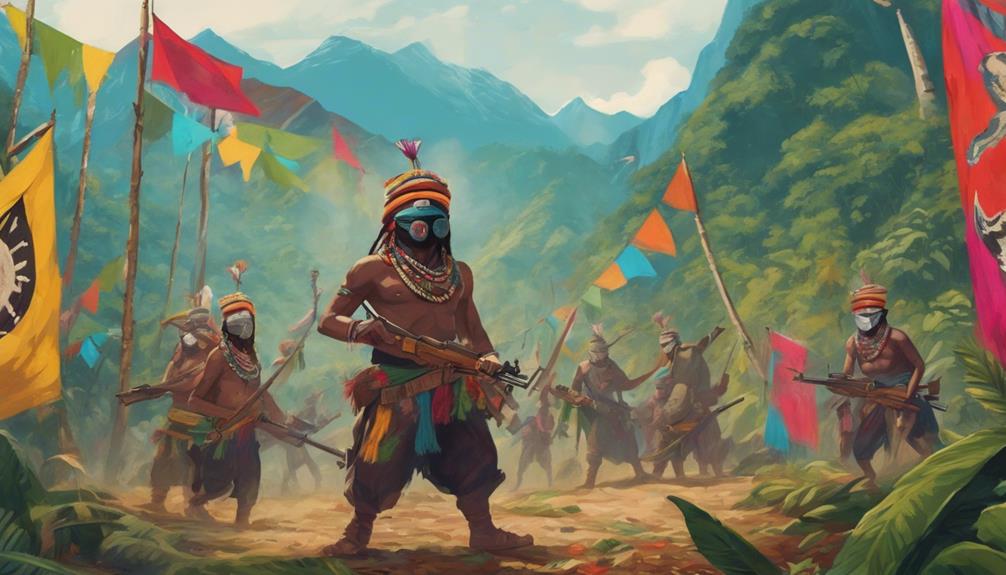
The Zapatista Uprising, which began in 1994, marked a pivotal moment for indigenous rights and autonomy in Chiapas, Mexico.
As the Zapatista Army of National Liberation (EZLN) rose against systemic injustices, they underscored the historical marginalization faced by indigenous communities.
This movement highlighted their struggles and brought global attention to their fight for self-determination and cultural preservation.
Indigenous Rights and Autonomy
On January 1, 1994, a significant uprising shook the southern state of Chiapas, Mexico, as the Zapatista Army of National Liberation (EZLN) rose to demand fundamental rights for the country’s indigenous population. Comprising primarily indigenous peoples, the EZLN sought to address longstanding grievances, focusing on indigenous rights and autonomy for the indigenous communities of Chiapas. Indigenous leaders take center stage, advocating for self-determination while preserving traditional Indigenous customs and traditions.
Their demands extended beyond immediate necessities, aiming to rectify historical marginalization. The Zapatistas emphasized the need for indigenous communities to govern themselves, promoting a vision where autonomy wasn’t just a distant dream but a tangible reality.
| Demand | Explanation |
|---|---|
| Work | Equitable employment opportunities |
| Land | Right to own and cultivate land |
| Housing | Access to adequate living conditions |
| Food | Food security for Indigenous people |
| Education | Culturally relevant educational access |
Historical Context and Impact
January 1, 1994, marks a pivotal moment in Mexican history when the Zapatista uprising erupted in Chiapas, capturing global attention. Led by the Zapatista Army of National Liberation (EZLN), this movement spotlighted the plight of indigenous peoples in Chiapas who’d long faced historical marginalization. The EZLN, primarily composed of indigenous communities, demanded work, land, housing, food, health, education, independence, liberty, democracy, justice, and peace. These demands underscored the deep-rooted inequalities and injustices that had plagued these communities for generations.
The Chiapas Conflict, as it came to be known, forced the Mexican Government to confront the systemic neglect and exploitation of indigenous peoples. It sparked a national and international discourse on indigenous rights and autonomy, demanding a re-evaluation of their political participation.
The uprising didn’t merely highlight the socioeconomic disparities; it also initiated peace negotiations between the EZLN and the government. These negotiations addressed grievances and established frameworks for greater representation and autonomy for indigenous populations.
The impact of the Zapatista uprising extends beyond Chiapas, influencing broader movements for social justice and indigenous rights worldwide. It remains a critical chapter in Mexico’s ongoing struggle for equality and representation.
Government Strategies and Responses
You’ll notice that the Chiapas government’s strategy of creating new municipalities without local input led to intensified tensions and disrupted traditional structures. This approach challenged indigenous autonomy and contributed to the breakdown of peace negotiations with the Zapatistas.
Additionally, the PRI party’s defeat in the 2000 election marked a shift in the region’s political landscape, further complicating efforts to address violence and unrest.
New Municipalities Strategy
The strategy of creating new municipalities in Chiapas has been a double-edged sword, leading to significant political turmoil. The government’s approach to establishing these municipalities without consulting the communities has broken down traditional structures. Ignoring community input hasn’t only undermined local governance and escalated ongoing conflict.
The Zapatistas, pivotal to peace negotiations, demanded new municipalities as part of their agenda. However, the government’s failure to meet these demands has intensified tensions and political instability in the region.
You’ve seen how this unilateral strategy has backfired. When new municipalities were created without proper consultation, tensions were exacerbated rather than resolved. The lack of community involvement has led to widespread dissatisfaction and conflict, hindering any potential progress towards peace.
This top-down approach has not only led to political instability but also jeopardized peace negotiations, creating a more complex and volatile situation in Chiapas.
To address these issues, the government needs to reconsider its strategy. Involving communities in the decision-making process could restore traditional structures and work towards genuine peace and stability in the region.
Indigenous Autonomy Challenges
While the Mexican government has attempted to address indigenous autonomy, its strategies have often fallen short. The indigenous law passed in 2001 aimed to recognize the multi-cultural nature of Mexico, granting freedom to indigenous communities and addressing the historical marginalization they’ve faced. However, the reality in Chiapas tells a different story. The EZLN movement has been a vocal advocate for indigenous rights, challenging the traditional subordinate position of these communities and shifting the dynamics with the government.
Despite these efforts, you’ll find several challenges remain:
- Military Presence: The significant military deployment to suppress the EZLN movement has heightened tensions, overshadowing the initiatives for indigenous autonomy.
- Economic Policies: Laws aligned with NAFTA favor large transnational companies over local needs, raising concerns about the country’s Balkanization by potentially creating autonomous indigenous regions with insufficient support.
- Basic Services: Indigenous communities in Chiapas still lack basic services like education and healthcare despite available resources, indicating a gap between policy and practice.
The Mexican government’s response to these challenges has been inconsistent, leaving indigenous communities in Chiapas to navigate these complexities largely on their own.
Election Impact and Violence
Traversing the political terrain in Chiapas during election periods is fraught with tension and violence. The government’s strategies, such as creating new municipalities without consulting local communities, often exacerbate these issues. This approach disrupts traditional structures and fuels electoral disputes, increasing violence. Political figures frequently become targets, and the involvement of criminal groups only heightens the conflicts. These disputes severely challenge the integrity of elections, overshadowing the political process.
Once dominant in Chiapas, the PRI party suffered a significant defeat in the 2000 elections, partly due to these backfiring strategies. The failure to address Indigenous rights also plays an important role, as unresolved tensions erode trust in both the government and the electoral system. The lack of effective solutions has broader implications for Mexican democracy, making it difficult to maintain fair and transparent elections.
| Challenges | Causes | Impacts on Chiapas |
|---|---|---|
| Electoral Disputes | Lack of Consultation | Distrust in Government |
| Political Violence | Criminal Group Involvement | Unsafe Election Periods |
| PRI Party Defeat | Ineffective Strategies | Loss of Political Control |
| Indigenous Rights | Unresolved Tensions | Negative Democratic Impact |
| Government Strategies | Creation of New Municipalities | Breakdown of Traditional Structures |
Ultimately, Chiapas remains a region where political strategies and unresolved conflicts continue to provoke violence and instability.
Land Conflicts and Political Violence
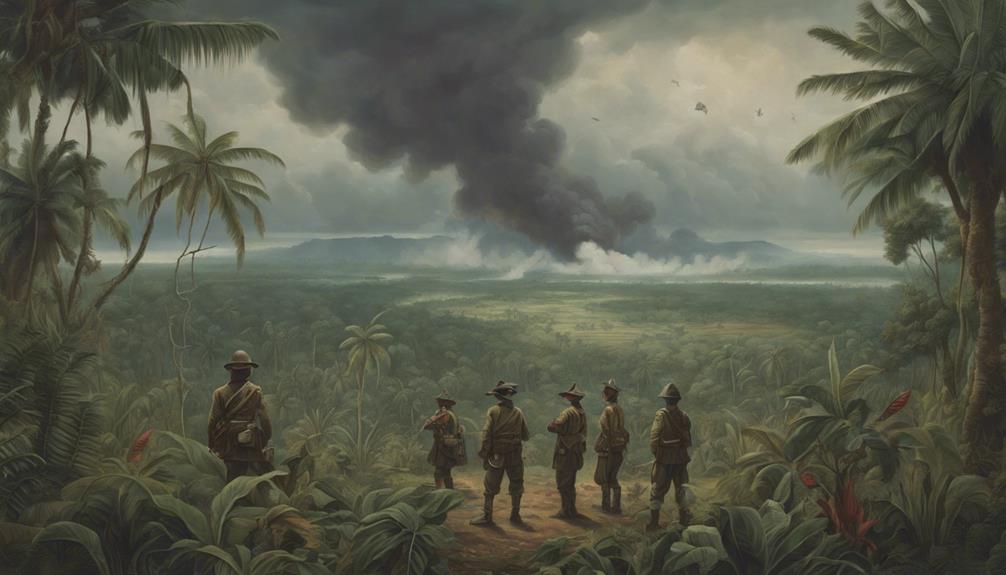
Amidst growing tensions, Chiapas, Mexico, faces significant challenges with 500 unresolved land conflicts, half of which involve Indigenous communities. These disputes often stem from disagreements over borders and resource administration, fueling political violence. In Chiapas, the struggle for autonomy is evident as Indigenous communities seek to maintain control over their lands and resources. Unfortunately, nonlocal actors like federal authorities and the private sector often exacerbate these conflicts, further complicating resolution efforts.
In response to the escalating violence, Indigenous populations in Oaxaca and Chiapas have turned to forming communal armed groups. This measure directly responds to the lack of effective protection and the failure of traditional forms of political participation to address their concerns. The impact of these conflicts can be summarized in three key points:
- Increased Tensions: The presence of nonlocal actors heightens distrust and complicates peaceful resolutions.
- Armed Responses: Indigenous communities resort to forming armed groups for self-defense.
- Autonomy Challenges: Traditional political and property rights systems struggle to uphold Indigenous autonomy.
Understanding these dynamics is essential for addressing the ongoing issues in Chiapas, ensuring that Indigenous voices are heard, and promoting peaceful conflict resolution.
Role of Religious Groups
Religious groups play a pivotal role in shaping the socio-political landscape of Chiapas, Mexico. The Catholic Church and the rise of Protestantism have significantly influenced the region’s religious dynamics. Bishop Samuel Ruíz‘s conservative vision left a lasting imprint on the Catholic Church’s approach in Chiapas. His initiatives empowered indigenous deacons, who became vital figures in religious and community activities. This empowerment has led to a new generation of leaders within the indigenous population, strengthening their voice in local affairs.
Protestantism emerged in Chiapas as a response to oppressive conditions, and Guatemalan churches introduced it. This new religious movement offered an alternative to the Catholic Church, appealing to those seeking change and empowerment. Protestantism has brought diversity to the spiritual landscape, challenging the Catholic Church’s traditional dominance. As a result, both religious groups have played important roles in addressing social issues and advocating for the rights of the indigenous population.
In Chiapas, religious groups haven’t only contributed to spiritual life but become key players in the socio-political arena. They’ve fostered unity, resilience, and leadership among the indigenous communities, shaping the region’s future.
Media Influence and International Reaction
While religious groups have greatly shaped Chiapas’ socio-political fabric, media influence, and international reaction have also played an important role in the region’s dynamics. The Chiapas conflict has drawn significant international attention, primarily due to media coverage highlighting human rights violations and the continued marginalization of Indigenous peoples. This has led to global scrutiny of the Mexican government’s approach, especially considering their failure to apprehend Subcomandante Marcos and other EZLN leaders.
Advocacy groups have been pivotal in bringing the Chiapas conflict to the forefront of international discourse. They’ve effectively used forums, websites, and media campaigns to support the Zapatistas. Human rights organizations have also been instrumental in exposing the struggles faced by Indigenous communities, which has generated substantial international criticism. As noted by Riordan Roett, this hasn’t only pressured the Mexican government but also influenced global perceptions of Mexico’s political stability.
Here’s how media influence and international reaction have impacted the Chiapas conflict:
- Increased Global Awareness: Media coverage has made Chiapas a focal point in human rights and indigenous issues discussions.
- Advocacy Support: Advocacy groups have amplified the voices of the marginalized.
- International Criticism: Global scrutiny has pressured the Mexican government to address the situation.
Conclusion
You’ve seen how Chiapas’s political landscape is a complex tapestry of historical struggles and modern challenges. Indigenous communities continue to fight for their rights amidst government actions that often disregard their voices. The Zapatista uprising highlighted these issues globally, yet land conflicts and political violence persist. As religious groups and the media influence perceptions, remaining aware and engaged is essential. Sustainable solutions can be found for Chiapas’s future only through understanding and dialogue.
FAQs
1. What Is Happening in Chiapas, Mexico?
You’re witnessing local tensions as indigenous communities stand up for social justice and cultural preservation amid land disputes. The government’s response impacts human rights, while international support highlights economic inequality. Rebel movements push for political reform in rural Chiapas.
2. What Is the Conflict in Chiapas, Mexico?
You’re witnessing a conflict rooted in indigenous rights and land disputes. The government’s response hasn’t addressed poverty rates or human rights violations. Socioeconomic factors persist despite international intervention, highlighting ongoing struggles for justice and equality in Chiapas.
3. What Cartel Controls Chiapas, Mexico?
You might be wondering which drug cartel controls Chiapas. The Sinaloa cartel and CJNG’s presence increases violence through criminal activity. The government’s response and law enforcement’s efforts struggle to guarantee community safety amid rampant drug trafficking operations.
4. What Is the Chiapas Civil Unrest?
You see the Chiapas civil unrest as an enduring struggle for indigenous rights: socioeconomic factors and historical background fuel tensions. The government’s response, marked by human rights violations, draws international attention. Peace negotiations remain challenging.