

Las Posadas: Celebrating Tradition and Togetherness
Regarding holiday traditions, Las Posadas is a unique and vibrant celebration. Rooted in Spanish customs and embraced widely in Mexico, this nine-night event reenacts Mreenactsoseph’s search for shelter in Bethlehem. Each evening, you’ll find processions with participants dressed in biblical attire, knocking on doors and singing carols. But it’s not just about the journey; there’s a deeper significance tied to community and hospitality. Are you curious about how these traditions have evolved and what their role is in modern celebrations? Let’s explore the essence and enduring charm of Las Posadas.
Key Takeaways
- Las Posadas commemorates Mary and Joseph’s journey to Bethlehem and is celebrated over nine nights before Christmas.
- Partireenact reenact for shelter, culminating in a joyful celebration with food, drinks, and prayers.
- Traditional foods include tamales, pozole, atole, champurrado, and buñuelos.
- Processions feature lit candles, children dressed as angels, and lively Christmas carols.
- Key symbols include the piñata shaped like a seven-pointed star and the procession of the santos peregrinos.
History and Origins

Las Posadas originated in Spain over 400 years ago and is now celebrated in Mexico to commemorate Mary and Joseph‘s journey to Bethlehem. This tradition, deeply rooted in Colonial Mexico, marks a significant prelude to Christmas. Las Posadas commemorates the nine days leading up to Christmas, symbolizing Mary and Joseph’s arduous search for shelter before the birth of Jesus.
During these nine days, from December 16 to 24, communities reunite to reenact the journey. Each evening involves a procession, where participants, often including children dressed as angels and shepherds, carry candles and religious figures. The procession moves from house to house, symbolizing Mary and Joseph’s quest for a place to stay.
When the procession reaches a home, participants sing traditional songs, reenacting or shelter. This tradition, brought to Mexico by Spanish missionaries, has evolved but retains its core message of faith, community, and hospitality. By participating in Las Posadas, you’re embracing a historic practice that prepares you for Christmas and strengthens community bonds, reminding everyone of the importance of generosity and compassion.
Nine Nights of Celebration
During the nine nights of celebration, you’ll experience a vibrant blend of tradition, faith, and community bonding. Each night symbolizes a month of Mary’s pregnancy as she and Joseph search for lodging in Bethlehem. The participants form a procession, often dressed as Mary and Joseph, carrying candles and singing Christmas carols.
As you join the procession, you’ll feel the anticipation and hope in the air. The journey from house to house, accompanied by heartfelt songs, reflects the couple’s quest for shelter. Hosts traditionally refuse lodging until the final night, heightening the sense of expectation and unity among participants.
| Night | Theme | Emotions Felt |
|---|---|---|
| 1 | Start of the journey | Hope and anticipation |
| 2 | Continued search | Persistence and faith |
| 3 | Efforts intensify | Community support |
| 4 | Nearing Bethlehem | Growing excitement |
| 5-8 | Sustained journey | Solidarity and patience |
The final night is a joyous occasion, as hosts open their doors, offering food and drinks, symbolizing the welcome to Mary and Joseph. The culmination in a midnight Mass on Christmas Eve marks the birth of Jesus. These nine nights celebrate the nativity and strengthen community bonds through shared faith and tradition.
Traditional Processions

In a traditional procession, you’ll witness participants carrying lit candles and images of Mary and Joseph, creating a moving tableau of faith and community. These processions highlight Las Posadas, transforming streets into a reenactment of Mary and Joseph’s journey to Bethlehem.
Children dressed as angels lead the enactment, their whiteite garments glowing in the candlelight, symbolizing the guiding stars. Musicians accompany the procession, infusing the air with lively Christmas carols that add to the festive atmosphere. Walking along, you’ll hear scripture passages read at each stop, reminding everyone of the nativity story.
These traditional processions vividly bring the journey to Bethlehem to life. Along the route, you’ll encounter hosts who traditionally refuse lodging to the weary travelers, echoing the biblical narrative. This ritual refusal continues until one host finally opens their door, symbolizing the welcome that Mary and Joseph eventually found.
The procession culminates in celebration, often with prayers, songs, and community gatherings. By participating in Las Posadas, you’re not just observing a tradition but becoming part of a centuries-old story of faith and perseverance.
Key Symbols and Customs
One of the most iconic symbols of Las Posadas is the piñata, traditionally shaped like a seven-pointed star representing the seven deadly sins. You’ll find these piñatas filled with candy, fruits, and sometimes small toys, symbolizing the devil’s temptations. Participants take turns blindfolded, swinging a stick to break the piñata, which signifies the destruction of evil and the triumph of good. When the piñata finally breaks, the candies and treats fall out, representing the rewards and blessings from God.
Another key custom in Las Posadas is the procession of the santos peregrines, or holy pilgrims. Treatment involves participants dressing as Mary and Joseph and journeying from house to house in an enactment shelter, just as they did in Bethlehem. The group sings traditional songs and asks for a place to stay, and at each house, they’re initially turned away, echoing the biblical story.
The procession often includes children carrying lit candles and others holding images of the santos peregrinos. It’s a deeply symbolic act, reminding everyone of the importance of hospitality and community, culminating in a joyful celebration when they’re finally welcomed.
Popular Posadas Foods

When celebrating Las Posadas, you’ll find an array of traditional foods that satisfy the palate and carry deep cultural significance. One of the most beloved dishes is tamales, which are made of steamed corn dough filled with various ingredients like chicken, pork, or cheese and wrapped in corn husks. These are a must-have at any Posadas gathering.
Another staple is pozole, a hearty soup made with hominy corn, meat (usually pork or chicken), and a blend of rich spices. Pozole is often garnished with fresh toppings like radishes, lettuce, and lime, making it flavorful and visually appealing.
Many people enjoy atole, a thick, comforting beverage made from masa (corn dough) and flavored with cinnamon or vanilla, to warm up on chilly nights. If you’re craving something sweeter, champurrado, a chocolate-flavored version of atole, offers a cozy and indulgent twist.
Bunuelos are a favorite dessert treat. These sweet fried dough pieces are generously sprinkled with sugar and cinnamon, providing the perfect ending to a festive meal.
Together, these traditional Posada foods create a feast embodying the holiday season’s spirit and warmth.
Music and Carols
How do traditional music and carols enhance the festive atmosphere of Las Posadas? The answer lies in the rich blend of traditional music and carols filling the event’s air.
As you join the procession, you’ll hear participants singing traditional villancicos and Christmas carols. These songs range from joyful and celebratory to reflective and solemn, capturing the emotional journey of Mary and Joseph.
Musicians often accompany the procession, adding a lively, dynamic element that makes the experience even more immersive. The traditional music’s melodies and rhythms help create a sense of unity among participants, drawing everyone into the shared experience of Las Posadas.
The role of music and singing goes beyond mere entertainment; it plays a key part in the procession’s storytelling aspect. Each villancico and hymn tells a piece of the Nativity story, making the event a festive celebration and a meaningful retelling of a significant cultural and religious narrative.
In this way, traditional music and carols enhance the festive atmosphere—they’re essential to the very essence of Las Posadas.
Community Involvement
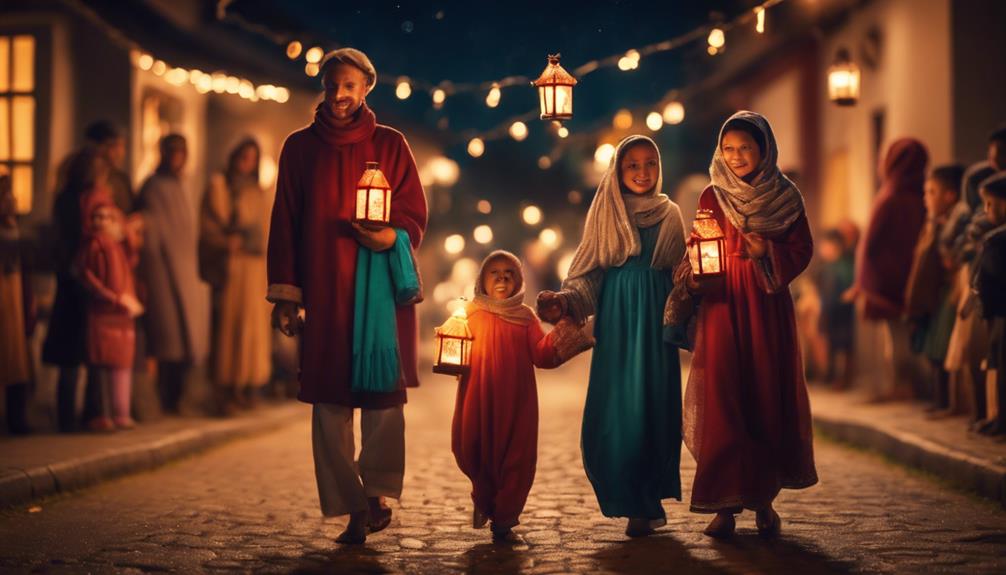
Community involvement is the heart of Las Posadas, with neighbors enthusiastically joining in the nightly processions and festivities. This cherished tradition fosters unity and togetherness as community members take on various roles, from hosting the procession to dressing up as biblical figures. Each role is essential in reenacting and Joseph, creating a shared experience that strengthens bonds and celebrates a rich cultural heritage.
During Las Posadas, you can see the Christmas spirit come alive through the collective efforts of everyone involved. The nightly processions are a vivid display of cooperation and warmth, where participants walk together, sing carols, and share in the season’s joy. The sense of belonging is palpable as each household opens its doors to the procession, offering refreshments and hospitality.
Here’s a snapshot of typical roles and activities during Las Posadas:
| Role | Activity | Purpose |
|---|---|---|
| Procession Host | Hosting the event | Providing a venue for the reenactment |
| Figure Participant | Dressing up as Mary or Joseph | Bringing the nativityreenactmentife |
| Refreshment Provider | Offering food and drinks | Fostering community spirit |
| Carol Singer | Singing traditional songs | Enhancing the festive atmosphere |
| Community Member | Joining the procession | Celebrating shared cultural heritage |
Through these shared rituals, Las Posadas commemorates the nativity story and reinforces the unity and Christmas spirit within the community.
Modern-Day Celebrations
Modern-day Las Posadas blend traditional customs with contemporary flair, creating vibrant celebrations that resonate with today’s communities. These events often include processions where participants dress as biblical figures like Mary, Joseph, and angels. These processions aren’t just a walk; they’re a reenactment of the entry to Bethlehem, filled with singing carols that echo through the sreenactmenting these modern-day celebrations. You’ll also encounter piñatas, often shaped like stars, which add an element of fun and excitement for children and adults. Smashing piñatas symbolizes breaking through barriers and is a joyous part of the festivities.
Here are some highlights of modern-day Las Posadas:
- Elaborate Costumes: Participants wear costumes representing biblical figures.
- Community Involvement: Neighbors open their homes, symbolizing hospitality.
- Cultural Fusion: Traditional elements mix with modern adaptations.
- Interactive Activities: There’s something for everyone, from piñatas to live music.
- Seasonal Spirit: Emphasizes themes of hospitality, community, and journey.
As a cultural event, Las Posadas serves not only as a religious observance but also as a means to bring communities together. It’s a celebration where tradition meets modernity, creating a unique and inclusive experience for all.
Conclusion
As you participate in Las Posadas, you’ll feel the warmth of community and the joy of shared traditions. Through the nightly processions, vibrant music, and delicious foods, you’re not just celebrating Mary and Joseph’s journey but embracing a rich cultural heritage.
Each night brings you closer to the true spirit of Christmas, fostering a sense of togetherness and hospitality. So, join in the festivities and experience the magic of Las Posadas firsthand!