Elevation of Santa Fe – Altitude, Climate & Travel Tips
When you think about Santa Fe, consider its impressive elevation of 7,198 feet. This altitude defines the city’s unique climate and affects daily activities. You’ll find that the thinner air requires some adjustment, whether you’re a resident or just visiting. With a history dating back to 1610, Santa Fe’s elevation has shaped its role as a key trade hub. Curious how this elevation influences life and health? There’s more to explore.
Key Takeaways
- Santa Fe’s elevation is 7,198 feet above sea level.
- It is the highest capital city in the United States.
- Santa Fe’s elevation is higher than Denver’s 5,280 feet.
- Its elevation significantly influences the local climate and environment.
- The high altitude impacts physical activities and requires acclimatization for visitors.
Overview of Santa Fe’s Elevation

While exploring Santa Fe, you’ll quickly notice its unique position as the highest capital city in the United States, perched at an impressive 7,198 feet above sea level.
This elevation means you’ll experience a cold semi-arid climate with its characteristic dry air and significant temperature fluctuations. The city’s location is higher than Denver, offering a distinct climate and environment that’s both challenging and rewarding.
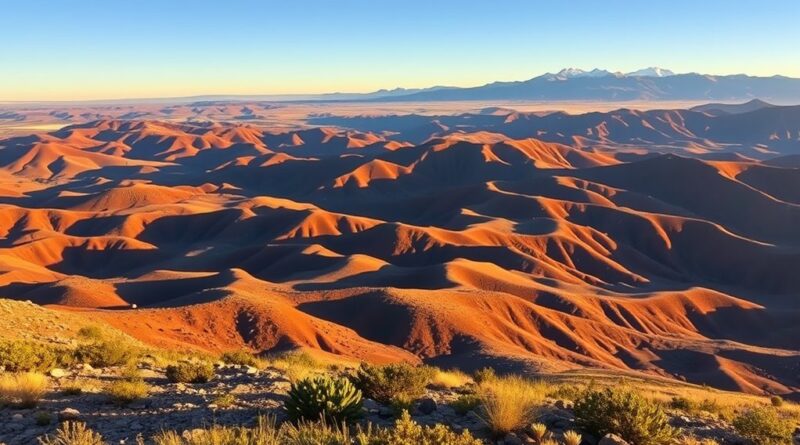
The surrounding mountainous terrain includes ski areas with even higher elevations, enhancing the breathtaking landscapes.
As you wander through Santa Fe, you’ll need to acclimate to the altitude, as the thinner air can be quite an adjustment for newcomers. Embrace the adventure and enjoy the striking beauty that this high elevation has to offer.
Impact of High Elevation on Residents and Visitors
Given Santa Fe’s elevation of 7,198 feet, the thinner air can make physical activities more challenging, leading to quicker fatigue and shortness of breath.
Due to the dry air and increased breathing rate, you might experience dehydration more rapidly, so drink more water than usual. Alcohol intake affects you more at the Santa Fe elevation, with one drink feeling like three at sea level, raising dehydration and altitude sickness risks.
Visitors often need a few days to acclimate to high elevation, with symptoms of Acute Mountain Sickness, like headaches and dizziness, appearing within 24-48 hours.
High altitudes also enhance sun exposure, increasing sunburn risk. Remember your sunscreen and protective gear when exploring Santa Fe’s beautiful outdoors.
Climatic Conditions at High Altitudes

Santa Fe’s high elevation of 7,198 feet gives it a unique climatic signature, characterized by a cold semi-arid mountain desert climate.
The climate in Santa Fe features dry air, which causes significant temperature fluctuations. Average temperatures might exceed 90°F during the day but can drop to the low 60s at night. This dramatic shift requires preparation.
High altitudes mean high UV exposure, so sunscreen is essential to prevent sunburn. Staying hydrated is also vital due to the dry air’s dehydrating effect.
Consider these points:
- Temperature Fluctuations: Day vs. night extremes.
- UV Exposure: Higher risk at high elevation.
- Dry Air: Leads to quick dehydration.
- Rapid Weather Changes: Monsoon rains can surprise you.
Stay prepared for Santa Fe’s unique climate.
Preparation for High Elevation Visits
When planning a visit to Santa Fe, focusing on hydration and acclimatization to its high elevation is vital.
Pack layers for temperature changes; don’t forget sunscreen to protect against intense sun exposure.
Understanding altitude sickness and initially taking it easy on activities will help you enjoy your stay without discomfort.
Hydration and Acclimatization Tips
Although Santa Fe’s stunning landscapes and vibrant culture are enchanting, its elevation of 7,198 feet presents unique challenges for visitors. Proper hydration and acclimatization are key when visiting this higher elevation.
Drinking plenty of water before arriving is essential to prepare, as the dry climate can cause dehydration quickly. Here are some tips to help you adjust:
- Limit alcohol: During the first 24-48 hours, alcohol effects are stronger at higher altitudes.
- Carry water bottles: Keep hydrated, especially during outdoor activities.
- Pace yourself: Allow a few days to adjust before diving into strenuous activities.
- Moisturize and use sunscreen: Protect your skin from the dry climate and increased sun exposure.
Clothing and Gear Essentials
As you focus on staying hydrated and acclimating to Santa Fe’s elevation, it’s equally important to contemplate the right clothing and gear for your visit.
At 7,198 feet, Santa Fe experiences significant temperature fluctuations, so dressing in layers is key. Start with a lightweight jacket for cool evenings and sudden weather shifts.
Don’t forget sturdy walking shoes for comfortably exploring uneven terrain and historic sites. Protect yourself from the sun’s intensified UV rays with a wide-brimmed hat and sunglasses, essential for enhancing visibility and eye protection during outdoor activities.
Altitude Sickness Awareness
Visiting Santa Fe means you’ll need to be mindful of altitude sickness, especially since the city is 7,198 feet above sea level. Symptoms like headache and dizziness can occur within 24-48 hours.
More severe conditions, such as high-altitude pulmonary Edema and cerebral Edema, require immediate attention.
To prepare, consider these steps:
- Hydrate: Drink plenty of water before and during your trip to minimize dehydration.
- Acclimatization: Pace your activities to allow your body to adjust to the thinner air.
- Limit Alcohol Consumption: Avoid alcohol in the first 48 hours as it can worsen symptoms and increase the risk of dehydration.
- Rest: Allow time for rest, especially in the initial days, to help your body adapt to Santa Fe’s elevation.
Effects of Altitude on Physical Health
While Santa Fe’s elevation of 7,198 feet offers breathtaking views and a unique climate, it also poses challenges to physical health. At this altitude, you may experience altitude sickness with symptoms like headache and dizziness, often appearing within 24-48 hours.
Staying hydrated is essential as the dry air and increased respiration can lead to dehydration. Please don’t underestimate the effects of alcohol; it hits harder here, where one drink may feel like three at sea level, heightening dehydration and impairment risks.
Additionally, sunburn is a real concern at high altitudes due to stronger UV radiation. Apply sunscreen, wear protective clothing outdoors to combat these effects, and enjoy all Santa Fe offers safely.
Historical Significance of Santa Fe’s Location

You mightn’t realize it, but Santa Fe’s elevation and location have deeply influenced its historical trajectory.
Its position at the foothills of the Sangre de Cristo Mountains made it a strategic hub for trade, fostering economic growth and cultural exchange between indigenous peoples and European settlers.
This unique blend of influences is a testament to Santa Fe’s enduring significance in shaping regional history.
Indigenous and Colonial Roots
Founded in 1610, Santa Fe’s location carries deep historical significance due to its rich indigenous and colonial roots.
Before becoming a Spanish colonial settlement around 900 AD, it was home to the indigenous Tanoan and Tewa peoples. The area’s cultural importance is undeniable, as it witnessed pivotal events that shaped its historical development.
Santa Fe’s elevation of 7,198 feet played a key role in its strategic significance. Consider these points:
- Santa Fe was a central colonial settlement named La Villa Real de la Santa Fe de San Francisco de Asís.
- Indigenous resistance was marked by the Pueblo Revolt of 1680, which temporarily expelled Spanish settlers.
- Cultural interactions during the “Bloodless Reconquest” in 1692 highlighted complex colonial relationships.
- Elevation influenced trade and settlement patterns, enhancing its historical significance.
Trade and Economic Growth
Perched at a strategic elevation, Santa Fe’s location along essential trade routes like El Camino Real de Tierra Adentro and the Santa Fe Trail transformed it into a bustling center of commerce.
You’ll find that Santa Fe thrived as a nexus for trade between Indigenous peoples and Euro-American traders, driving economic growth and fostering friendly relations between Mexico and the U.S.
These historical trade routes didn’t just boost the economy; they enriched Santa Fe’s cultural heritage, weaving diverse cultural threads into its vibrant tapestry.
With the influx of traders and settlers in the 19th century, a diverse economy emerged, linking multiple industries to trade and cultural exchange.
Santa Fe’s pivotal role in trade also influenced territorial claims during the Mexican-American War era.
Santa Fe’s Elevation in Comparison to Other Cities
How does Santa Fe measure up against other cities in terms of elevation? Santa Fe stands tall at 7,198 feet, making it the highest capital city in the United States. This impressive elevation places it among the highest cities in America.
Consider these points:
- Compared to Denver, Santa Fe’s elevation is considerably higher than Denver’s 5,280 feet.
- Comparison with Albuquerque: Santa Fe is about 1,886 feet higher than Albuquerque’s 5,312 feet.
- National ranking: It ranks third in altitude, trailing only Leadville and Alma, Colorado.
- Impact on newcomers: The elevation results in thinner air, requiring you to acclimate to the altitude.
Santa Fe’s lofty position affects how you experience the city. It offers remarkable views but also challenges those unaccustomed to high altitudes.
Tips for Acclimating to Santa Fe’s Elevation

Adjusting to Santa Fe’s elevation of 7,198 feet requires some thoughtful preparation. At this high altitude, dehydration can occur quickly, so drink plenty of water before and during your visit to help acclimate.
Limit alcohol consumption initially, as it can intensify altitude effects—one drink here feels like three at sea level. Avoid strenuous activities for the first few days to let your body adapt and prevent altitude sickness. Increased sun exposure is a concern in locations with over 300 sunny days yearly. Apply sunscreen and wear a hat to protect against sunburn.
Conclusion
When you visit Santa Fe, you’ll quickly notice how its elevation shapes your experience. The thinner air and unique climate demand that you adjust your activities and be mindful of your health. Embrace the historical charm and vibrant culture, but don’t forget to prepare for the altitude. With some preparation and awareness, you’ll enjoy everything this high-altitude city offers, from its stunning landscapes to its rich history, while staying comfortable and safe.
FAQs
1. Is Altitude Sickness in Santa Fe Common?
Altitude sickness can happen in Santa Fe, especially if you’re coming from lower altitudes. Symptoms like headaches and dizziness might hit within 24-48 hours. Stay hydrated, take it easy, and give your body time to adjust.
2. Is Santa Fe Higher Than Denver?
Yes, Santa Fe is higher than Denver. You’ll notice it’s 1,918 feet higher, sitting at 7,198 feet compared to Denver’s 5,280 feet. This elevation difference results in cooler summers and thinner air in Santa Fe.
3. How Do You Acclimate to Santa Fe Altitude?
To acclimate to the altitude, gradually increase your activity, drink plenty of water, and limit alcohol. Dress in layers for temperature changes. Use sunscreen, hats, and sunglasses for UV protection. Your body will adjust with time.
4. Is Santa Fe the Highest CUSy in the US?
Santa Fe isn’t the city with the most elderly in the U.S.; South Dakota claims that title. However, Santa Fe is the highest state capital, so you’ll experience cooler temperatures and thinner air at this elevation.