

Monte Alban Oaxaca: Ancient Ruins & Stunning Views
When you think of Monte Alban in Oaxaca, imagine stepping into a world where ancient history comes alive. This archaeological site, once the bustling heart of the Zapotec civilization, offers a glimpse into a bygone era of political, economic, and religious significance. As you explore its terraced architecture and intricate stone carvings, you’ll uncover secrets that continue to captivate historians and travelers. Curious about what Monte Alban truly has to offer?
The Historical Significance of Monte Alban

While exploring the historical significance of Monte Alban, you’ll discover its role as a major cultural and political center in ancient Mesoamerica. Founded around 500 BCE, it served as the capital of the Zapotec civilization for over a thousand years. The site witnessed the rise and fall of powerful dynasties, shaping regional politics and trade. As you investigate further, you’ll see how Monte Alban influenced neighboring cultures through its strategic location and extensive trade networks. It facilitated cultural exchanges, fostering the spread of ideas, art, and religion. By its decline around 750 CE, Monte Alban had left an indelible mark on Mesoamerican history. Its legacy intrigues historians and archaeologists, revealing new insights into ancient civilizations.
The Architecture and Design of Monte Alban
As you explore Monte Alban, you’ll notice its unique terraced platforms that create a stunning visual harmony with the surrounding landscape. These platforms not only served practical purposes but also showcased the ingenuity of their creators. Intricate stone carvings adorn various structures, revealing stories and artistry that speak volumes about the civilization’s cultural richness.
Unique Terraced Platforms
Nestled in the heart of Oaxaca, Monte Alban’s unique terraced platforms showcase the ingenuity of ancient Zapotec architects. You’ll be amazed at how these platforms transform the rugged mountain into a harmonious blend of nature and human craft. Each terrace serves a purpose, whether for ceremonial, residential, or agricultural activities, and they reflect a deep understanding of the landscape.
Imagine standing on these platforms, where every stone was placed with precision. The Zapotecs engineered them to prevent erosion and manage water flow, ensuring sustainability. Here’s a glimpse of some terraces:
| Terrace Name | Purpose | Feature |
|---|---|---|
| Main Plaza | Ceremonial | Wide open space |
| North Platform | Residential | Housing remains |
| South Platform | Agricultural | Crop terraces |
Explore these marvels yourself, and you’ll appreciate their timeless design.
Intricate Stone Carvings
One of Monte Alban’s most enchanting features is its intricate stone carvings. These carvings tell stories of ancient Zapotec life, showcasing their artistic prowess and spiritual beliefs. As you wander through the site, you’ll notice the detailed depictions of deities, warriors, and everyday life etched into stone.
Each carving reflects the skill and dedication of the artisans who created it. The precision and depth of these images reveal the Zapotecs’ sophisticated understanding of symbolism and art. Look closely, and you’ll see the fine details that make each piece unique, from the expressions on the carved faces to the elaborate patterns surrounding them. These carvings offer a window into a vibrant civilization that once thrived here.
Key Structures to Explore at Monte Alban
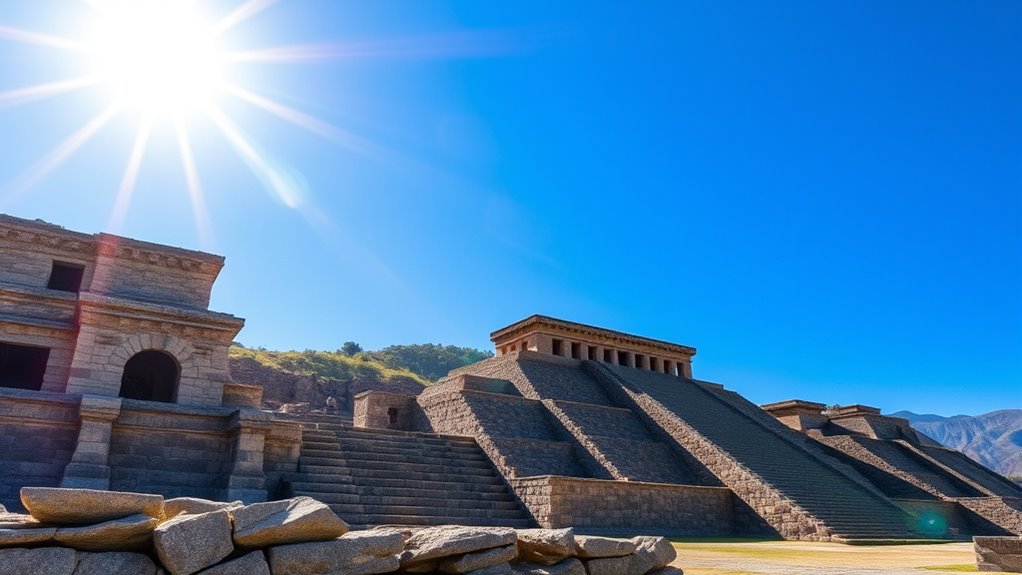
While exploring Monte Alban, you’ll find an array of fascinating structures that reveal the rich history of this ancient Zapotec capital. Start with the Grand Plaza, a massive open area that served as the city’s center. You’ll notice the Ball Court nearby, where ceremonial games took place, adding a dynamic element to the site. Don’t miss the Observatory, known for its unique arrowhead shape, which is believed to have been used for astronomical purposes. The Pyramids are a must-see, particularly the impressive Pyramid of the Sun, which offers breathtaking views of the surrounding valley. As you wander, you’ll find the Danzantes, a series of stone carvings depicting figures in various poses, providing insight into Zapotec artistry. Each structure tells a story of Monte Alban’s past.
The Role of Monte Alban in Zapotec Society
Monte Alban played an essential role in the Zapotec civilization’s social, political, and economic life. It was more than just a ceremonial center; it was a thriving urban hub. The city unified various communities, serving as the heart of the Zapotec world. Its influence stretched far and wide, impacting every aspect of daily life.
Benefits of Monte Alban to Zapotec society:
- Political Center: Leaders governed and made significant decisions here.
- Economic Hub: Trade flourished with goods from distant regions.
- Religious Site: It hosted important rituals and ceremonies.
- Cultural Exchange: Ideas and innovations spread throughout the region.
- Military Stronghold: Its strategic location offered defense advantages.
Monte Alban was a pivotal force in shaping the Zapotec civilization.
The Art and Iconography of Monte Alban
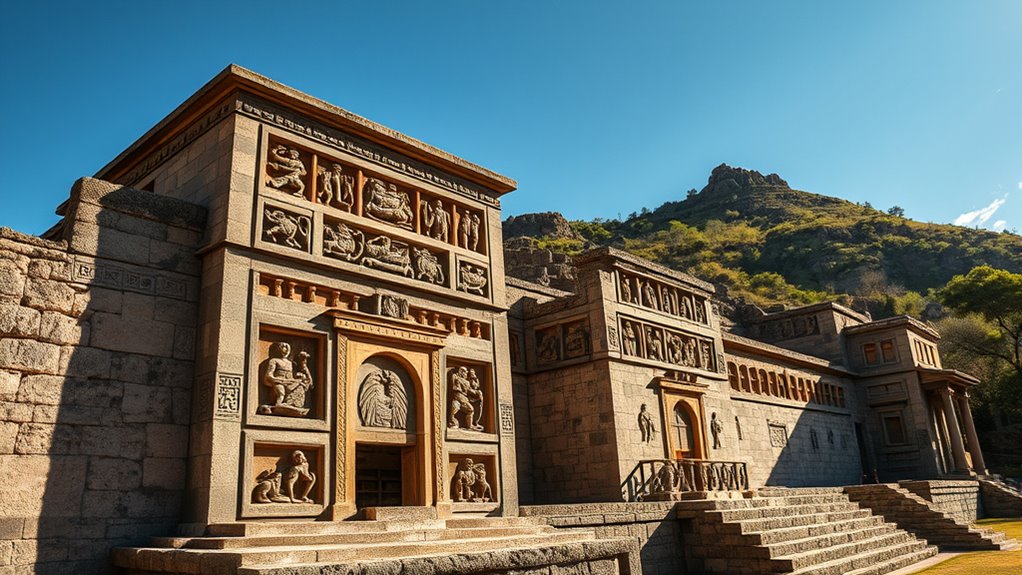
The vibrant art and intricate iconography of Monte Alban reveal much about its influential role in Zapotec society. As you explore these ancient carvings and murals, you’ll notice how they depict daily life and sacred rituals. The Danzantes, for instance, are striking stone carvings that portray dancers or possibly captives, offering insight into the cultural and ceremonial practices of the time.
You can also see the glyphs conveying the Zapotecs’ sophisticated writing system. These symbols highlight the importance of communication and record-keeping in their culture. The architecture is a canvas, with reliefs and sculptures demonstrating the Zapotecs’ artistic prowess. Each piece invites you to investigate deeper into the beliefs and values that shaped this remarkable civilization.
Visiting Monte Alban: Tips and Information
Ever wondered how to make the most of your visit to Monte Alban? This ancient Zapotec site offers stunning ruins and breathtaking views. Start early to avoid the crowds and heat. Bring a good pair of walking shoes to explore the vast site. Don’t miss the museum at the entrance for context on what you’ll see. Here are some tips to enhance your experience:
- Arrive early: Beat the midday sun and crowds by starting your visit when the site opens.
- Wear comfortable shoes: There’s plenty of uneven terrain to cover.
- Bring water and snacks: Stay hydrated and energized.
- Hire a guide: Learn about the rich history from knowledgeable locals.
- Allow plenty of time: There’s much to explore, so don’t rush.
Monte Alban’s Influence on Mesoamerican Cultures

You’ll find that Monte Alban stands as a symbol of architectural marvels and innovations that influenced countless Mesoamerican cultures. It’s a place where cultural exchange flourished, shaping neighboring civilizations’ beliefs and religious practices. As you explore its legacy, you’ll see how its impact spreads far beyond its borders.
Architectural Marvels and Innovations
Even as you explore the vast expanse of Mesoamerican history, Monte Alban stands out as a beacon of architectural innovation and influence. This ancient city, perched high above the Oaxaca Valley, showcases remarkable construction techniques that have left an indelible mark on surrounding cultures. You’ll find it fascinating how builders made the most of their environment and resources. Consider these architectural marvels:
- Terraces: Ingenious use of the mountain’s slopes for agriculture and construction.
- Ball courts: Sites for ritual games, indicating a blend of sport and ceremony.
- Observatories: Structures aligned with celestial bodies for astronomical observations.
- Danzantes: Intricately carved stones, possibly depicting historical or mythical figures.
- Platform mounds: Elevated structures providing a base for temples and public buildings.
Monte Alban’s innovations continue to inspire and intrigue.
Cultural Exchange and Influence
While traversing the rich tapestry of Mesoamerican cultures, you can’t overlook Monte Alban’s profound influence on its neighbors. This ancient Zapotec city was a hub of cultural exchange, fostering connections through trade, art, and governance. As you explore its reach, you’ll notice how its architectural styles, like terraces and plazas, inspired other regions. Monte Alban’s strategic position allowed it to act as a cultural intermediary, spreading innovations in ceramics and iconography across Mesoamerica.
You’ll find that Monte Alban’s influence extended to political practices, too. Its centralized power structure served as a model for emerging states. You can trace this impact by examining artifacts and settlement patterns, revealing a network of shared ideas that shaped the region’s development. Monte Alban wasn’t just a city but a beacon of cultural dynamism.
Religious Practices and Beliefs
Though often overshadowed by its architectural and political achievements, Monte Alban’s religious practices and beliefs profoundly shaped Mesoamerican cultures. Its influence extended beyond its borders, impacting various aspects of daily life and spirituality. Monte Alban served as a spiritual hub where you’d witness a blend of rituals and ceremonies. The Zapotec priests played an essential role in interpreting the will of the gods, guiding the people through:
- Ritual sacrifices to appease deities and guarantee agricultural prosperity
- Astronomical observations to predict celestial events and agricultural cycles
- Ceremonial ball games symbolizing cosmic battles
- Use of sacred symbols carved in stone for spiritual communication
- Construction of temples as sacred spaces for worship
Monte Alban’s spiritual legacy echoes throughout Mesoamerican history.
Preservation Efforts and Future Prospects for Monte Alban

Nestled in the heart of Oaxaca, Monte Alban is a tribute to ancient civilizations, and preserving its rich history is a priority. You can support these efforts by visiting responsibly and respecting site rules. Restoration teams work tirelessly to maintain the integrity of the structures, using methods that minimize impact. To prevent damage, avoiding touching or climbing on the ruins is essential.
Looking ahead, technology plays a key role in preservation. Digital mapping and 3D modeling help experts better understand the site. You might also participate in virtual tours, which offer an immersive experience without physical wear and tear. By spreading awareness and engaging with sustainable tourism, you guarantee that Monte Alban remains a vibrant link to the past for future generations.
Conclusion
When you visit Monte Alban, you’ll enter a world where the past comes alive. Explore the stunning architecture and intricate carvings that speak to the ingenuity of the ancient Zapotec civilization. As you wander through key structures, you’ll gain insight into the site’s political and spiritual significance. Monte Alban’s influence on Mesoamerican cultures is undeniable, and ongoing preservation efforts guarantee that its rich legacy will continue to captivate and educate future generations.
FAQs
1. How Can I Get to Monte Alban From Oaxaca City?
You’re wondering how to reach a popular site from Oaxaca City. Catch a bus from the city center. It’s affordable and frequent. Alternatively, hire a taxi or join a guided tour for convenience and insight.
2. Are There Any Guided Tours Available at Monte Alban?
Yes, there are plenty of guided tours available. They offer insightful information about the site’s history and significance. Choose a reputable tour operator, and you’ll have an enriching experience exploring the fascinating ruins.
3. What Is the Best Time of Year to Visit Monte Alban?
Visit during the dry season, from November to April. The temperatures are pleasant, and you’ll avoid the summer rains. Plan your trip to enjoy fewer crowds and fully immerse yourself in the experience.
4. Are There Any Food or Drink Facilities at Monte Alban?
You’re wondering about food and drink options at the site. Don’t worry; small vendors ares nearby where you can grab snacks and beverages. Just remember to bring some cash, as cards aren’t always accepted.
5. Is Monte Alban Accessible for Visitors With Mobility Issues?
If you have mobility issues, it can be a bit tricky. The site has uneven terrain and stairs, making accessibility challenging. Consider asking for assistance or visiting with someone who can help navigate the ancient grounds.