

When Is Semana Santa? The Celebration of Holy Week
When planning your calendar, understanding when Semana Santa, or Holy Week, occurs is crucial, especially if you’re involved in its rich traditions. In 2024, Semana Santa starts on March 24th with Palm Sunday and concludes on March 31st, Easter Sunday. This period is not just a series of dates; it holds deep significance with various rituals and ceremonies. But what exactly happens on each of these days, and how do they shape the spiritual experience for millions worldwide?
Key Takeaways
- Semana Santa 2024 begins on March 24th with Palm Sunday.
- Maundy Thursday in 2024 falls on March 28th.
- Good Friday for Semana Santa 2024 is on March 29th.
- Holy Saturday is observed on March 30th in 2024.
- Easter Sunday, marking the end of Semana Santa 2024, is on March 31st.
Overview of Semana Santa

Semana Santa, or Holy Week, is a deeply significant religious observance celebrated with fervor in many Spanish-speaking countries. This week-long event typically unfolds during the week leading up to Easter Sunday, marking the Passion, Death, and Resurrection of Jesus Christ.
The term ‘Semana Santa‘ translates to ‘Holy Week’ in English and is a period of spiritual reflection and devotion for countless Catholics and Christians around the world.
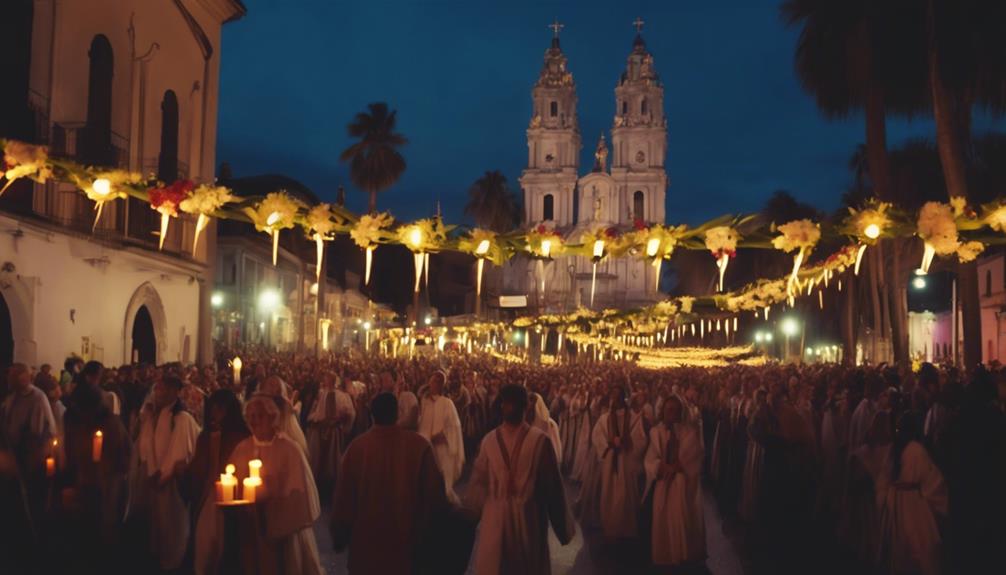
During Semana Santa, you’ll witness a variety of traditions that have been passed down through generations. One of the most striking aspects of Holy Week is the processions. These solemn parades feature participants in traditional attire, often carrying religious statues and icons through the streets.
In countries like Spain, Mexico, and the Philippines, these processions are particularly elaborate and draw large crowds of locals and tourists alike.
Each region has its unique way of commemorating the events of Holy Week. In Spain, for example, the processions are known for their grandeur and emotional intensity. In Mexico, you’ll find a blend of indigenous and Catholic traditions that add a distinct flavor to the celebrations. Meanwhile, the Philippines showcases a deeply rooted Catholic devotion with its own set of rituals and ceremonies.
Historical Background
Rooted in the early centuries of Christianity, the historical background of Holy Week reveals traditions that have shaped its profound significance today. You’ll find that Semana Santa, or Holy Week, has its origins in the 3rd and 4th centuries. During this time, Christians began to commemorate the Passion of Jesus, focusing on key events that led to His crucifixion and resurrection.
Holy Week starts with Palm Sunday, marking Jesus’ triumphant entry into Jerusalem. As the week progresses, Holy Thursday commemorates the Last Supper, where Jesus shared his final meal with his disciples. This day is vital as it sets the stage for the events of Good Friday, the day Jesus was crucified. The Church has long held these days in high regard, emphasizing their significance through various rituals and observances.
Good Friday and Holy Saturday emerged as particularly solemn days, reflecting on Jesus’ suffering and death. Finally, Easter Sunday celebrates His resurrection, marking the end of Holy Week with joy and hope.
Early Church writings, such as The Pilgrimage of Etheria, provide detailed insights into these longstanding traditions, showing how deeply rooted and significant these observances have been throughout history.
Key Dates for 2024
Mark your calendar for Holy Week 2024, starting on Sunday, March 24th with Palm Sunday. Semana Santa 2024 will be a week-long observance filled with significant events and religious ceremonies. You’ll want to be aware of the key dates to fully partake in the traditions and reflections that come with this sacred period.
Following Palm Sunday, the next key date is Maundy Thursday on March 28th. This day commemorates the Last Supper of Jesus Christ with his apostles.
The day after, March 29th, is Good Friday, marking the crucifixion and death of Jesus. It’s a solemn day of mourning and reflection.
Holy Saturday, observed on March 30th, is a day of waiting and preparation for the resurrection.
Finally, Semana Santa culminates with Easter Sunday on March 31st, celebrating the resurrection of Jesus Christ and marking the end of Holy Week.
Each of these key dates—Palm Sunday, Maundy Thursday, Good Friday, Holy Saturday, and Easter Sunday—holds deep spiritual significance and is celebrated with various religious ceremonies. Make sure you’re prepared to engage in the meaningful traditions that Semana Santa 2024 brings.
Palm Sunday Significance
Palm Sunday serves as the gateway to Holy Week, commemorating Jesus’ triumphant entry into Jerusalem and setting the stage for the profound events that follow. This day marks the beginning of Jesus’ Passion, leading up to His crucifixion. Christian communities around the world observe Palm Sunday with great solemnity and tradition, recognizing its pivotal role in the Holy Week timeline.
On Palm Sunday, you’ll find various customs and rituals reflecting its significance:
- Triumphal Entry Reenactments: Many churches hold processions to reenact Jesus’ entry into Jerusalem, symbolizing His acceptance as the Messiah.
- Blessing of Palms: It’s a tradition to bless and distribute palm branches, representing the palms laid before Jesus as He entered the city.
- Scripture Readings: Passages recounting Jesus’ entry and the beginning of His Passion are read during services to remind the faithful of the events.
- Solemn Prayers: Special prayers and hymns are recited, emphasizing the solemnity of the occasion and preparing believers for the coming days of reflection.
Palm Sunday isn’t just a historical observance; it’s a deeply spiritual day that invites you to reflect on Jesus’ journey towards the Crucifixion. This tradition helps set a reverent tone for the rest of Holy Week.
Maundy Thursday Traditions

As Holy Week progresses, Maundy Thursday commemorates the Last Supper Jesus shared with His disciples, introducing profound traditions that highlight humility and service. On this day, you’ll often observe the washing of feet, a powerful act symbolizing humility and service, reflecting Jesus washing the feet of His disciples. This tradition reminds you of the importance of serving others selflessly.
The term ‘Maundy’ comes from the Latin word ‘mandatum,’ meaning commandment, referring to Jesus’s command to love one another. During the Last Supper, Jesus instituted the Eucharist, a central element in Christian worship, where bread and wine become symbols of His body and blood. This act also marked the foundation of the priesthood, as Jesus instructed His disciples to continue this practice in remembrance of Him.
In many Christian denominations, Maundy Thursday services might include the stripping of the altar, a solemn ritual that prepares the church for the somber observances of Good Friday. This act underscores the shift from the Last Supper’s communal celebration to the impending sacrifice Jesus would make. By participating in these traditions, you engage deeply with the themes of humility, service, and love central to Maundy Thursday.
Related Article: Guelaguetza Festival: Celebrating Oaxacan Culture and Traditions
Good Friday Observances
Good Friday stands as a day of deep mourning and reflection, commemorating the crucifixion of Jesus Christ. On this solemn day, Christians around the world engage in various observances to honor the sacrifice made by Jesus. You’ll find that these traditions are deeply rooted in reverence and contemplation.
Here are four common Good Friday observances:
- Fasting: Many Christians observe a day of fasting, abstaining from meat and other indulgences as a form of penance and self-denial.
- Church Services: Attending special church services is a central part of Good Friday. These services focus on the Passion narrative and often include readings from the Gospels.
- Stations of the Cross: Participating in the Stations of the Cross allows you to walk through the final moments of Jesus’ life, reflecting on his suffering and death.
- Eucharist Distribution: The Eucharist distributed on Good Friday is consecrated during the Mass of the Lord’s Supper on Holy Thursday, emphasizing continuity in the Holy Week observances.
Observing Good Friday encourages a profound sense of mourning and reflection, bringing you closer to the significance of Jesus Christ’s crucifixion and the depth of his sacrifice.
Holy Saturday Customs

On Holy Saturday, Christians around the world engage in fasting, prayer, and reflection as they await the celebration of Easter Sunday. This day, deeply rooted in Christian tradition, signifies a period of mourning and anticipation. Many devote themselves to fasting to symbolize the solemnity of Jesus’ time in the tomb. It’s a time for introspection and spiritual readiness, a moment for meditation on the significance of Christ’s sacrifice.
In the evening, the Easter Vigil, one of the most significant liturgical celebrations, typically occurs. This powerful service marks the start of Easter and incorporates various elements that enhance its spiritual impact. Many churches conduct a service of light, symbolizing the transition from the darkness of the tomb to the light of the resurrection. This includes the lighting of the Paschal candle, symbolizing Christ as the light of the world.
Holy Saturday is also a time for preparation. Whether through prayer, reflection, or participation in the liturgical celebration, this day is crucial for getting ready for the events of Easter Sunday. By observing these customs, you become part of a global community participating in a profound and meaningful tradition.
Easter Sunday Celebrations
Easter Sunday bursts forth with joy and celebration as Christians commemorate the resurrection of Jesus Christ. This day marks the culmination of Holy Week and symbolizes new beginnings, hope, and victory over death. Churches around the world become vibrant with decorations, particularly white lilies, which represent purity and rebirth.
You’ll find that Easter Sunday is a time for special services and Mass, where communities gather to celebrate this significant event. The atmosphere in churches is festive and well-attended, reflecting the joy and hope that the resurrection brings.
Here are four key elements you can expect on Easter Sunday:
- Special Services: Churches hold unique services and Mass to mark the resurrection of Jesus Christ.
- Flower Decorations: White lilies and other flowers adorn the churches, symbolizing purity and new beginnings.
- Joyful Atmosphere: The mood is celebratory, filled with hymns, prayers, and readings that highlight the resurrection.
- Community Gatherings: Families and friends come together, both in church and at home, to share meals and fellowship.
Easter Sunday in 2024 falls on March 31st, following the meaningful observances of Holy Week, making it a day of profound celebration and reflection.
Global Celebrations

Many countries around the world celebrate Semana Santa with unique and vibrant traditions that reflect their cultural heritage. As a significant religious observance in mostly Catholic countries, Holy Week includes a series of events starting with Palm Sunday and culminating in Easter Sunday.
In Spain, Semana Santa is marked by elaborate processions where participants carry heavy, ornately decorated floats depicting biblical scenes. These processions are accompanied by music and penitents in traditional robes.
In Mexico, you’ll find dramatic reenactments of the Passion of Christ, especially on Good Friday. The streets come alive with actors portraying key biblical figures, creating a moving spectacle that draws large crowds.
In the Philippines, the religious observance includes a mix of solemn rituals and festive activities. Maundy Thursday and Good Friday are especially important, featuring processions, the washing of feet, and the reading of the Passion narrative.
Meanwhile, Guatemala’s Antigua is renowned for its intricate alfombras (carpets) made of colored sawdust and flowers, which line the streets for processions.
Each day of Holy Week—Palm Sunday, Maundy Thursday, Good Friday, Holy Saturday, and Easter Sunday—brings its own customs and ceremonies, making Semana Santa a deeply enriching experience for both participants and observers.
Conclusion
As you immerse yourself in Semana Santa, you’ll experience a deep connection to centuries-old traditions and profound moments of spiritual reflection.
From Palm Sunday to Easter Sunday, each day offers unique rituals and ceremonies that bring the story of Jesus Christ’s Passion, Crucifixion, and Resurrection to life.
Whether you’re participating in local processions or attending church services, Semana Santa invites you to renew your faith and celebrate the essence of Easter with a global community.