

Cuernavaca Mexico – The City of Eternal Spring
Cuernavaca, Mexico, known as the “City of Eternal Spring,” is a place where stunning landscapes and a rich history intertwine. You’ll find this temperate city nestled in the Sierra de Chichinautzin mountains, making it an ideal retreat since the times of Aztec emperors. As you explore its vibrant cultural scene and Spanish language schools, you’ll uncover a city that’s more than just a tourist destination. Curious about its secrets and offerings?
Key Takeaways
- Cuernavaca, known as the “City of Eternal Spring,” boasts a temperate climate with year-round temperatures ranging from 21 to 26°C.
- Located 40 miles south of Mexico City, Cuernavaca is a popular retreat for tourists and the elite.
- Rich in history, Cuernavaca features Aztec archaeological sites and colonial architecture, like the Palacio de Cortés.
- Known for its Spanish language immersion programs, the institution attracts international students for cultural and academic exchange opportunities.
- Cuernavaca’s vibrant community is characterized by its rich cultural heritage and social activism, which enhances its unique atmosphere.
Geography and Climate

Nestled in the Valley of Morelos, just 40 miles south of Mexico City, Cuernavaca stands at an impressive elevation of about 5,000 feet.
This city is renowned for its temperate climate, earning it the nickname “City of Eternal Spring.” You’ll find that Cuernavaca enjoys pleasant temperatures year-round, ranging from 21 °C to 26°C (70°F to 79°F).
The southern slope of the Sierra de Chichinautzin mountains cradles this vibrant city, providing a lush landscape teeming with bougainvillea, fresh-water springs, and picturesque waterfalls.
The natural beauty and agreeable climate have made Cuernavaca a favored retreat for both tourists and Mexico’s elites.
Whether you’re exploring its flora or simply soaking in the serene environment, Cuernavaca’s geography and climate offer a delightful experience.
Historical Significance
As you explore Cuernavaca’s history, you’ll find it was once a favorite retreat for Aztec emperors, who enjoyed its pleasant climate and natural beauty.
The city took on new significance during the Spanish Conquest, leaving a lasting impact on its development.
Cuernavaca’s transformation into a colonial center under Spanish rule continues to shape its cultural and historical landscape today.
Aztec Summer Residences
Cuernavaca’s allure as an Aztec summer residence stemmed from its temperate climate and lush environment, which provided a rejuvenating escape from the intense heat of the Valley of Mexico.
Located in Morelos, Cuernavaca became a favored retreat for Aztec emperors. Its strategic position and natural beauty attracted notable figures, such as Moctezuma II. The area not only offered a pleasant climate but also abundant resources, making it an ideal royal getaway.
You can explore important archaeological sites, such as Teopanzolco, a ceremonial center linked to the Aztec civilization, which highlights the city’s historical significance.
Before the Aztecs, the Tlahuica people utilized Cuernavaca as a strategic location. This rich history makes Cuernavaca a fascinating destination to uncover ancient Aztec influences.
Spanish Conquest Impact
Though the Spanish Conquest of Cuernavaca in 1521 was swift, its impact was profound and enduring. Hernán Cortés and Gonzalo de Sandoval led the charge, resulting in the pillaging of Cuernavaca and the imposition of Spanish colonial rule.
This marked a significant transformation in Morelos state, as Cuernavaca quickly became an essential colonial administrative center. Governed by Itzohuatzin, its strategic importance was clear.
The Franciscans arrived in 1529, establishing one of New Spain’s first monasteries in Cuernavaca, crucial in spreading Christianity.
The Spanish influence reshaped the city’s architecture and culture, evident in the construction of the Palacio de Cortés, completed in 1535. This building stands as a powerful symbol of colonial power and the lasting impact of the Spanish conquest.
Demographics and Population
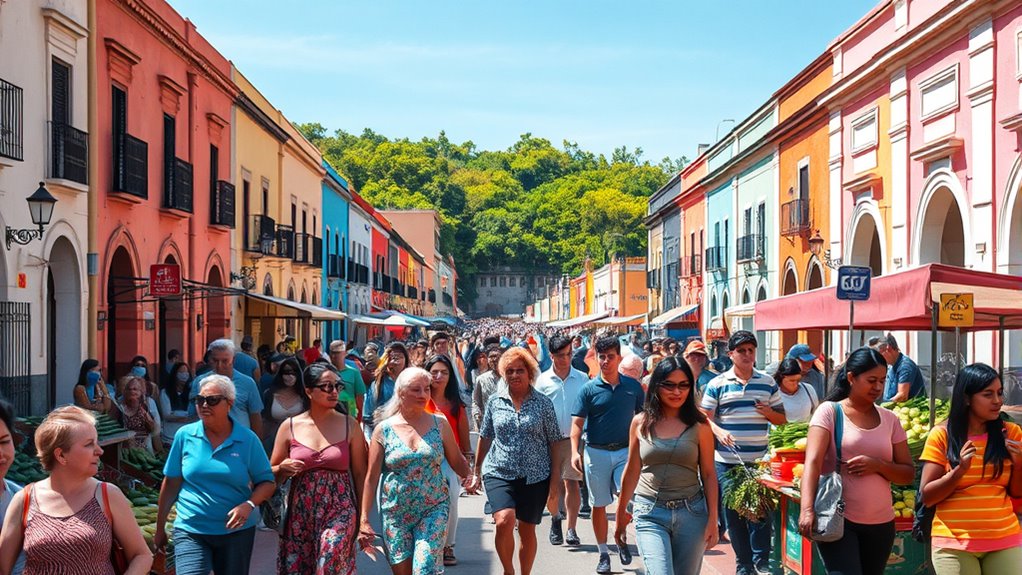
Cuernavaca, a vibrant city located in the state of Morelos, is home to a diverse and dynamic population. As of 2015, the town itself housed 366,321 inhabitants, while the metropolitan area boasted a population of 912,024.
By 2020, Cuernavaca’s population had decreased slightly to 341,029, while the metropolitan area had grown to approximately 1,028,589. This growth was fueled by Mexico City residents seeking weekend retreats starting from the 1940s.
The city has seen a significant influx of foreign residents, many of whom are students eager to learn Spanish.
With urbanization, Cuernavaca faces pressure on its infrastructure, especially with the expansion of middle-class housing. This dynamic demographic landscape highlights Cuernavaca’s evolving character and ongoing appeal to both locals and newcomers alike.
Cultural and Social Aspects
Renowned for its vibrant cultural tapestry, Cuernavaca has long been a magnet for influential figures and movements. Its cultural significance is evident in its history of attracting notable personalities, such as Emperor Maximilian I and Bauhaus designer Walter Gropius, not Michael van Beuren.
The city became a hub for the psychedelic movement in the 1960s, with Timothy Leary’s experiments with psilocybin mushrooms showcasing its role in alternative cultural expressions. The establishment of the Centro Intercultural de Documentación in 1966 highlighted Cuernavaca’s commitment to educational and cultural exchanges.
Social activism also thrives here, with the Frente Civico advocating for cultural heritage and environmental preservation. Despite the challenges of urbanization, Cuernavaca remains a city where culture and activism intersect dynamically, fostering a unique community spirit.
Points of Interest

When exploring Cuernavaca, you’ll find a rich tapestry of historical and cultural landmarks that captivate visitors.
Start your journey at the Palacio de Cortés, Morelos’ most iconic building. Completed in 1535, it hosts cultural events and exhibitions highlighting the city’s colonial past. Inside, visit the Morelos State Museum, established in 1929, to admire Diego Rivera’s murals.
For a glimpse into Mesoamerican heritage, the pre-Columbian ruins of Teopanzolco offer a feast for the eyes.
Don’t miss the San Francisco Cathedral, one of Cuernavaca’s oldest churches, which showcases a colonial architectural style dating back to 1529.
Finally, wander through the lush 18th-century gardens of silver baron Don José de la Borda, a reflection of the region’s historical wealth and natural beauty.
Accommodation and Dining Options
Whether you’re seeking luxury or traveling on a budget, Cuernavaca has a wide range of accommodations to suit your needs.
For a luxurious stay, consider Anticavilla Restaurant, Hotel & Spa, boasting a 4.7/5 rating and a nightly rate of $133.
If you’re watching your wallet, Casa Francisco Cuernavaca offers a comfortable experience with a 4.2/5 rating, starting at just $45 per night.
When it comes to dining, Verdesalvia Restaurante is a must-visit for Italian contemporary cuisine, earning a 4.8/5 from diners.
For authentic Mexican flavors, consider Casa Hidalgo and Los Colorines, which boast ratings of 4.4/5 and 4.0/5, respectively.
If you’re seeking a lively night out, Casa Barcenal, a Mexican pub, holds a perfect 5.0/5 rating.
Local Festivals and Events

After indulging in the culinary delights and finding a cozy place to rest, immerse yourself in Cuernavaca’s vibrant local festivals and events that pulse with cultural energy. In April, the Festival de las Flores transforms the city with stunning floral displays and lively parades. October brings the International Festival of the Arts, attracting talents from around the globe for theater, music, and dance. November’s Day of the Dead fills Cuernavaca with colorful altars and heartfelt processions.
In February, the Carnival electrifies the streets with vibrant parades and cultural activities. December celebrates the Festival of the Virgin of Guadalupe with heartfelt processions and ceremonies. Here’s a glimpse of the festival calendar:
| Month | Festival |
|---|---|
| February | Carnival |
| April | Festival de las Flores |
| October | International Festival of the Arts |
Transportation and Accessibility
Navigating Cuernavaca is a breeze thanks to its well-connected transportation options.
If you’re arriving from Mexico City, the toll highway, Federal Highway 95D, offers a convenient 90-minute drive. For those who prefer flying, the regional airport provides domestic and limited international flights, making travel straightforward.
Public transportation is reliable, with buses and taxis readily available, ensuring easy access to various parts of the city and nearby attractions.
If you enjoy exploring at your own pace, consider renting a car. Cuernavaca’s compact size makes navigation simple, and many attractions are within walking distance.
Whether you’re using public transportation or your vehicle, navigating the city is hassle-free, making your visit to this charming destination even more enjoyable.
Educational Institutions and Opportunities
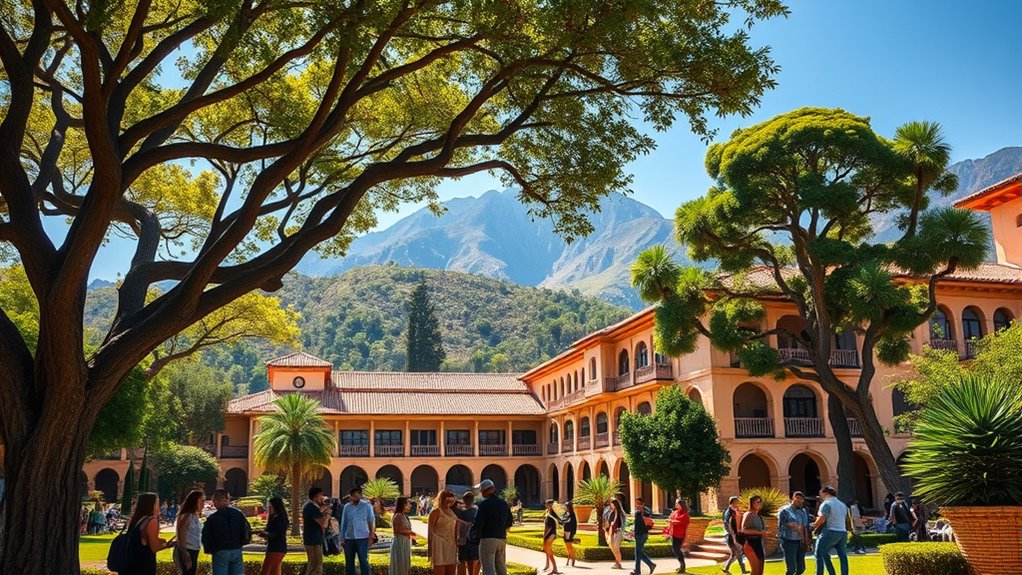
Although nestled in the heart of Mexico, Cuernavaca shines as a beacon for educational excellence. The city is home to the Autonomous University of Morelos State, founded in 1953, which offers a diverse range of undergraduate and graduate programs.
Language schools abound, attracting foreign students who are enthusiastic to immerse themselves in Spanish. Cuernavaca’s educational institutions don’t stop at language; they also embrace cultural and academic exchanges, collaborating with international partners to provide enriching experiences.
The Centro Intercultural de Documentación, established by Ivan Illich, stands out for its focus on Spanish education for North American missionaries.
With its pleasant climate and vibrant cultural heritage, Cuernavaca is an ideal destination for educational retreats and workshops, offering unique learning experiences for both locals and international visitors.
Conclusion
In Cuernavaca, you’ll find a vibrant blend of history, culture, and natural beauty. Explore its rich past at sites like the Palacio de Cortés and enjoy its lively cultural scene. The city offers a perfect climate, making it an ideal destination for relaxation and adventure. Whether you’re savoring local cuisine, attending a festival, or learning Spanish, Cuernavaca’s charm captures your heart. With easy access and diverse accommodations, it’s a must-visit gem in Mexico.
FAQs
1. Why Is Cuernavaca Famous?
You’re probably wondering why it’s so famous. You’ll find that its unbeatable climate, colonial history, and vibrant cultural scene attract visitors. Known for its breathtaking nature and historical landmarks, it’s a favorite retreat for both locals and tourists.
2. Is Cuernavaca Safe?
You’re probably wondering if it’s safe. While crime can be a concern, staying vigilant and informed is crucial. Many travelers enjoy their visit without problems, especially in tourist spots. Just follow safety tips and local advisories.
3. How Long Does It Take From Cuernavaca to Mexico City?
You’ll typically drive from Cuernavaca to Mexico City in about 90 minutes on Highway 95D, but expect the trip to take longer due to traffic. Buses are also available, although they may extend your journey due to stops.
4. Is It Safe to Go to Cuernavaca, Mexico?
You’re wondering about safety. It’s safe to visit if you stay informed and cautious. Stick to well-traveled areas, follow local advisories, and don’t forget to enjoy the rich history and culture awaiting you.