
Cultural Etiquette in Yucatan: Customs & Local Manners
In Yucatan, warmth and respect define social interactions, beginning with formal greetings like “¡Buenos días!” and the use of titles such as “señor” or “señorita” to convey politeness and courtesy. Social gatherings often involve long meals where sharing stories takes center stage, and it’s customary to say “buen provecho” before beginning to eat. While punctuality is relaxed for social events, it’s essential for formal occasions. Engaging with local customs can further deepen your connections, but there’s more to discover. Learn more about Cultural Etiquette in Yucatan.
Key Takeaways
- Use formal greetings like “¡Buenos días!” and individual greetings in group settings for politeness.
- Engage in physical contact, such as handshakes and cheek kisses, to convey warmth and affection.
- Offer seats and let elders pass first to demonstrate respect.
- Arrive 30 minutes late to social events, but be punctual for business meetings.
- Wish others “buen provecho” before meals to show appreciation for dining etiquette.
Social Etiquette and Respectful Interactions

When you’re in Yucatán, understanding local social etiquette is essential for respectful interactions. Formal greetings like “¡Buenos días!” are expected, even with strangers. In group settings, take the time to greet each person individually. Using respectful titles such as “señor,” “señora,” or “señorita,” along with professional titles, shows your politeness and cultural awareness.
In social interactions, physical contact is common; a handshake for strangers or a cheek kiss among friends signals warmth. Avoiding an embrace might seem unfriendly.
Respect for elders is essential—let them pass first and offer your seat when necessary. Conversations often start with inquiries about family and life. Responding positively to these questions demonstrates your openness, fostering friendly and respectful connections in Yucatán.
Traditional Greetings and Goodbyes
When you visit Yucatán, personal greetings hold great importance, as each interaction begins individually, often with a handshake or a friendly kiss on the cheek.
Embraces are culturally significant, emphasizing the warmth and connection valued in social exchanges.
As you say goodbye, expect to mirror these gestures with either a handshake or an embrace, and remember to address people respectfully, using proper titles, especially with elders or those of higher status.
Importance of Personal Greetings
Although some might overlook the significance of greetings, in Yucatán, they’re a cornerstone of social interaction. You should always initiate with a warm “¡Buenos días!” even with strangers, setting a friendly tone.
When you meet a group, individual greetings are expected as a sign of respect. Physical contact plays a key role—handshakes are common with new acquaintances, while friends often greet with a kiss on the cheek.
As you part ways, mirror this warmth through physical contact, maintaining social bonds. Always use polite forms of address and appropriate titles, which show your respect for local customs.
These gestures aren’t just formalities; they’re fundamental to fostering genuine connections and showing appreciation for Yucatán’s rich cultural tapestry.
Cultural Significance of Embraces
Expanding on the importance of personal greetings, embraces in Yucatán hold a deep cultural significance, marking both the beginning and the end of social interactions.
Physical contact, such as an embrace or a kiss on the cheek, conveys warmth and camaraderie, essential for nurturing friendships and acquaintances. When greeting someone in a group, it’s customary to acknowledge each person individually, thereby reinforcing the value of personal connections.
By avoiding an embrace, you might inadvertently signal a rejection of friendship, underscoring the importance of physical affection in maintaining social bonds. Saying “¡Buenos días!” even to strangers exemplifies politeness and respect.
Similarly, when leaving a gathering, take a moment to say goodbye to each person, further emphasizing these cherished social ties.
Formal and Informal Farewells
Farewells in Yucatán are as important as greetings, deeply rooted in the tradition of valuing personal connections. When you’re leaving a gathering, it’s customary to greet each person individually, just as you did upon arrival.
Whether through a handshake or a kiss on the cheek, this personal touch in both formal and informal farewells reflects the community’s warmth and affection. Saying “¡Hasta luego!” indicates you’ll meet again, while “¡Adiós!” suggests a more permanent goodbye.
Remember, acknowledging farewells is essential to maintaining social bonds. Even when moving past someone, a polite “con permiso” is appreciated. These practices emphasize respect and connection, significant aspects of Yucatecan culture.
Always respond to greetings and farewells; it reinforces amiable and respectful interactions.
Dining Etiquette and Table Manners
When dining in Yucatan, understanding local customs can enhance your experience. Embrace the culture by wishing others “buen provecho” before they start their meals. This simple gesture reflects good dining etiquette.
Meals here are often social and lengthy, so relax and let conversations flow. It’s customary for one party to treat, as splitting the bill is uncommon. If you’re the host, covering the expenses is expected of you.
Remember these tips:
- Tipping: Leave 10-15% at restaurants; foreigners appreciate a higher percentage.
- Spiciness: Communicate your spice tolerance to enjoy dishes comfortably.
- Patience: Servers won’t rush you; savor the multi-course experience.
Importance of Timeliness and Appointments

While savoring the rich dining experiences in Yucatan, it’s also important to grasp the local sense of time, particularly regarding timeliness and appointments.
In Yucatán, punctuality for social engagements is more relaxed. Arriving 30 minutes late to home parties is customary and won’t offend your hosts.
However, when it comes to business meetings, official events, and doctor appointments, punctuality is essential. Being on time shows respect and professionalism.
Accepting invitations, even if you’re unsure of attending, is common, with late arrivals being more acceptable than outright decline.
Embrace the “mañana” mindset, which reflects flexibility in social settings.
Yet, remember that in formal contexts, being punctual is crucial to maintaining successful interactions and relationships.
Proper Use of Titles and Address
Maneuvering social interactions in Yucatán requires an understanding of the proper use of titles and addresses. Using “señor” for men and “señora” for married or older women shows respect. For younger women, “señorita” is a suitable term. When addressing professionals, use specific titles like “licenciado” for lawyers or “doctor/doctora” for medical professionals.
In conversations, politeness is key, so use “usted,” especially when meeting someone new or speaking with elders.
Remember these tips:
- Use paternal surname: Mexicans typically have two surnames, but only the paternal surname is used directly.
- Err on the side of formality: It’s better to be overly respectful than too casual.
- Observe and adapt: Notice how others address each other to refine your approach.
This attention to detail guarantees respectful communication.
Cultural Celebrations and Festivities
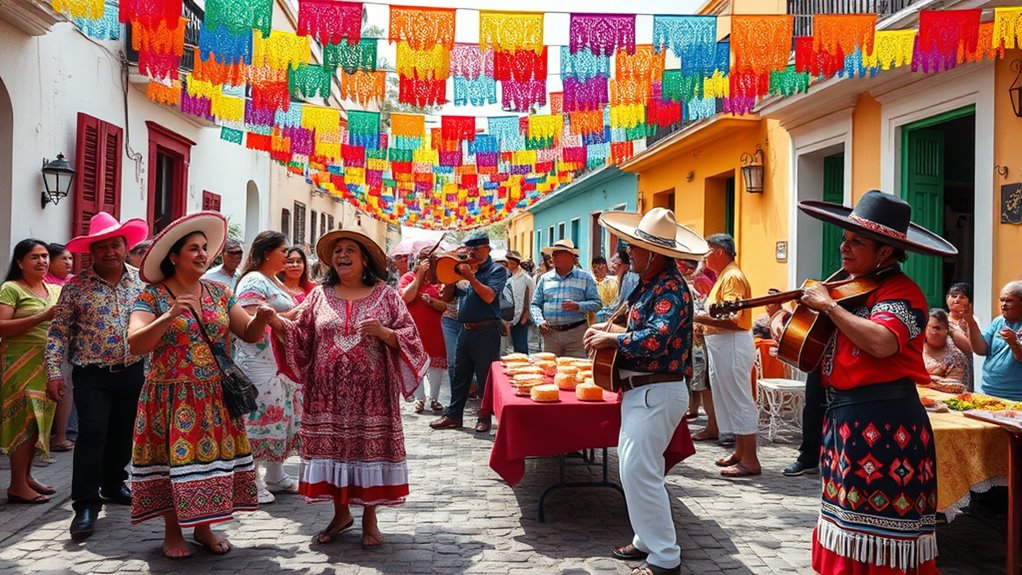
Although Yucatán boasts a variety of vibrant cultural celebrations, none are as emblematic as the Day of the Dead, also known as Día de Muertos. Celebrated on November 1st and 2nd, it’s a time when families honor their deceased with elaborate altars and offerings.
Traditional foods like tamales and mucbipollo play a pivotal role in these celebrations, symbolizing a connection between the living and the departed.
In September, Yucatán joins the nation in celebrating Mexico’s Independence Day on the 16th. You’ll experience parades, fireworks, and traditional dishes, such as chiles en nogada, that reflect national pride.
Don’t miss the Cha-chaac ceremony, where locals ask the rain god for bountiful harvests.
These cultural celebrations beautifully showcase Yucatán’s rich traditions and communal spirit.
Art, Music, and Dance Traditions
If you find yourself in Yucatán, you’ll quickly notice that art, music, and dance are woven into the region’s cultural fabric.
Yucatecan trova music, with its rich blend of bambuco, bolero, and jarana rhythms, captures the essence of the area’s unique heritage. In Mérida, the Museo de la Canción Yucateca offers an in-depth exploration into this musical genre’s history.
When attending local festivities, you’ll likely see jaranas, traditional dances performed with lively trio ensembles. These cultural experiences are often enhanced by the region’s flavorful dishes, such as cochinita pibil, a nod to its diverse culinary heritage.
Here are some must-experience cultural highlights:
- Explore vibrant Yucatecan art exhibits.
- Listen to trova music in public squares.
- Enjoy a traditional jarana dance performance.
Engaging With Local Customs and Language

Understanding and embracing local customs and language can greatly enrich your experience in Yucatán. Engaging with locals in Yucatán begins with a friendly “¡Buenos días!” and showing respect by using titles like “señor” or “señorita.”
It’s essential in Mexico to learn a few basic Spanish phrases, as they facilitate smoother interactions, even with gas station attendants. When meeting someone new or speaking to elders, use the formal “usted” to maintain politeness.
Social gatherings here are key, so remember arriving 30 minutes late is expected at home events, but be punctual for formal ones. Don’t shy away from personal chats; locals often inquire about family out of genuine curiosity. Sharing a bit about yourself helps build connections and enrich your visit.
Conclusion
Embrace Yucatan’s cultural etiquette by greeting others warmly and using titles like “señor” or “señorita.” Immerse yourself in local traditions by sharing meals and wishing “buen provecho” before dining. While punctuality is flexible for casual events, make certain you’re on time for formal occasions. Respect local customs and avoid sensitive topics to foster better communication. By engaging with the vibrant art, music, and dance of Yucatan, you’ll deepen your appreciation for its rich cultural tapestry.
FAQs
1. What Is the Culture of Yucatán?
You’ll find Yucatán’s culture is a vibrant mix of Maya and Spanish influences. Immerse yourself in the rich gastronomy, enjoy lively festivals, and explore the architectural wonders. Don’t miss the enchanting Yucatecan trova music echoing through its historical streets.
2. What Is Considered Proper Etiquette in Mexico?
You should use formal titles like “señor” or “señora” for respect, greet with handshakes or cheek kisses, value punctuality at formal events, say “buen provecho” before meals, and expect one party to treat during dining.
3. How to Dress in Yucatán?
You should wear lightweight, breathable clothes for Yucatán’s warm climate. Swimwear is a must for beaches, and comfortable shoes help with exploring. Embrace local culture by wearing traditional attire, but avoid overly casual wear away from the beaches.
4. What Are the Table Manners and Etiquette in Mexico?
You should always say “buen provecho” before eating and when leaving a meal early. Expect one party to cover the bill typically. Be ready to tip 10-15%. Engage in conversations during meals, as they are social events.