
Importance of Piñatas in Mexican Celebrations
You might find piñatas at the heart of Mexican celebrations intriguing, as they’re more than just colorful party decorations. They’re deeply rooted in tradition, embodying themes of resilience and community spirit. When you participate in the lively act of breaking a piñata, you’re not just enjoying a fun activity but engaging in a rich cultural ritual. Have you ever considered how these vibrant creations symbolize overcoming challenges and fostering unity? This connection between past and present might change how you view these festive fixtures and, perhaps, make you wonder about their broader impact.
Key Takeaways
- Piñatas are central to Mexican celebrations, symbolizing joy, unity, and cultural traditions.
- Breaking a piñata signifies overcoming life’s challenges and achieving sweet victories.
- They enhance festive occasions, bringing shared happiness and memorable experiences to participants.
- Modern piñatas feature vibrant designs, reflecting both traditional and contemporary cultural elements.
- Piñatas serve as educational tools, teaching Mexican heritage and fostering cultural appreciation.
Historical Roots of Piñatas

When you think about the historical roots of piñatas, explore their fascinating journey from ancient rituals to festive celebrations. You begin with the Aztec and Mayan civilizations, where piñatas played a significant role in religious ceremonies to honor the gods. They crafted these traditional items from clay, signifying a deep cultural and spiritual connection.
Fast-forward to the 16th century, when Spanish missionaries arrived in Mexico. They saw an opportunity to integrate piñatas into their religious teachings, especially during Christmas Posadas. This was a clever way to blend Mexican traditions with Spanish religious practices.
The original star-shaped piñata had seven points, each representing one of the seven deadly sins. This symbolism was used to teach moral lessons, making the piñata not just a festive item but a tool for spiritual reflection.
Over time, piñatas evolved beyond their religious origins. They became popular in various Mexican celebrations, such as birthdays and Christmas, symbolizing joy and unity. Despite the changes, piñatas have maintained their cultural significance, bridging the gap between ancient traditions and modern festivities. Their journey from clay symbols of sin to vibrant harbingers of celebration reflects their enduring legacy in Mexican culture.
Symbolism in Mexican Culture
In Mexican culture, piñatas burst with vibrant symbolism that encapsulates joy, unity, and celebration. When you participate in the tradition of breaking a piñata, you’re not just partaking in a fun activity but engaging with a practice rich in cultural significance. The symbolism behind piñatas extends beyond mere festivity. They often embody traditional Mexican symbols or characters, making them more than just decorative items. Each piñata is an iconic symbol of Mexican celebrations, bringing people together and fostering community.
In religious ceremonies, like the Christmas Posadas, piñatas hold deep spiritual symbolism. Traditionally, the seven points on star-shaped piñatas represent the seven deadly sins, and breaking them symbolizes the triumph over these challenges. This act is more than symbolic; it’s a way of connecting faith with joyous festivities. By overcoming these symbolic obstacles, participants hope to bring good luck and blessings into their lives.
Piñatas are integral to Mexican celebrations, underscoring unity and shared happiness themes. They symbolize overcoming life’s difficulties and reaping the rewards, making them indispensable in marking special occasions with joy and spiritual reflection.
Evolution of Piñata Designs

Piñatas Deeply ingrained in Mexican cultural symbolism, pietas have undergone a fascinating evolution in design. As you explore this journey, you’ll see how piñatas have evolved to include popular characters from pop culture, adding a playful and contemporary twist to their traditional designs. This evolution guarantees they appeal to younger generations and reflect the vibrant mix of cultural significance and modern trends.
- Contemporary Characters: Modern piñatas often feature famous characters from movies, TV shows, and cartoons, making them instantly recognizable and exciting for children and adults alike.
- Vibrant Themes: Artisans craft piñatas in various colors and themes, showcasing their creativity and the rich artistic heritage of Mexican culture.
- Diverse Shapes and Sizes: You’ll find piñatas in countless forms, from classic stars to intricate animals, demonstrating the skill and imagination of their creators.
- Blending Tradition and Innovation: The evolution of piñata designs preserves their cultural significance by incorporating new elements that keep the tradition alive and relevant today.
These contemporary designs embody joyous celebrations and shared heritage, blending traditional craftsmanship with modern influences.
Role in Festive Occasions
In Mexican celebrations, piñatas play a vibrant cultural role that symbolizes festive rituals.
When you break a piñata, you’re not just enjoying a fun activity; you’re participating in a tradition that signifies unity and shared joy.
Whether at a birthday or during Christmas Posadas, the piñata ritual brings people together and reinforces cultural customs and values.
Vibrant Cultural Tradition
Few traditions capture the essence of Mexican celebrations quite like the vibrant piñata. Whether it’s a birthday, Christmas, or any other cultural celebration, piñatas symbolize joy and unity within Mexican culture. Traditionally made from colorful paper, these festive icons are more than just decorations; they represent shared values and are a tribute to the enduring tradition of communal joy.
When you attend any Mexican celebration, you’ll likely witness the exciting moment when a piñata is broken. This activity brings people together, fostering a spirit of fun and excitement. Blindfolded participants take turns hitting the piñata until it bursts, releasing its hidden treasures.
Here’s why piñatas are essential to these festive occasions:
- Symbol of Abundance: Filled with candies, fruits, and toys, piñatas symbolize rewards and plenty.
- Cultural Heritage: They’re crucial to Mexican cultural celebrations and traditions.
- Unity and Joy: Breaking a piñata unites participants in laughter and happiness.
- Vibrant Decor: Their colorful paper design adds a lively touch to any celebration.
In essence, piñatas embody the vibrant spirit of Mexican festivities, creating unforgettable moments for everyone involved.
Symbolic Festive Rituals
As we explore the symbolic festive rituals within Mexican celebrations, piñatas hold a place of profound importance. They’re not just colorful decorations; they embody joy, unity, and celebration. Whether it’s a birthday, Christmas, or a wedding, piñatas are central to these festive occasions.
Breaking a piñata symbolizes more than just fun—it’s about bringing people together in a joyful, interactive experience. Blindfolded participants take turns hitting the piñata, creating an atmosphere filled with excitement and laughter that strengthens bonds among friends and family.
Christmas in Mexico, particularly during the posadas leading up to Christmas Eve, showcases the piñata’s significance. These celebrations are steeped in Mexican traditions, where breaking the piñata is a highlight.
As you swing at the piñata, you’re not just aiming to release treats; you’re participating in a ritual that highlights cultural unity and festive spirit. The anticipation builds as everyone gathers around, sharing in the moment’s communal joy and thrill.
Piñatas With their vibrant colors and symbolic meaning, pietas are indispensable in Mexican celebrations. They weave together heritage and happiness in every swing.
Crafting Techniques and Materials
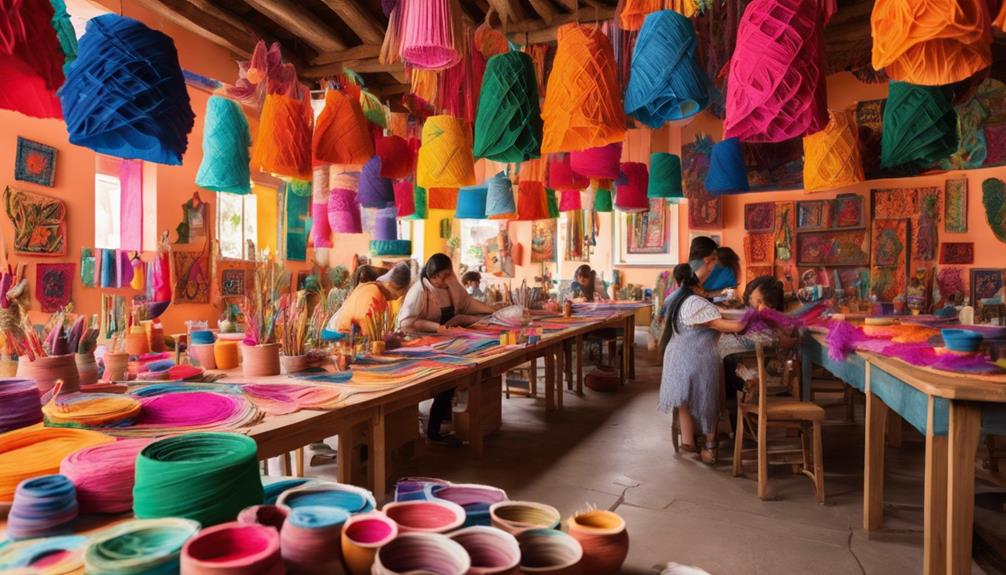
Have you ever wondered how piñatas come to life? The magic lies in the crafting techniques and materials used. It all starts with constructing the framework using sturdy cardboard and newspaper. This forms the basic shape of the piñata, whether it’s a classic star or a whimsical animal.
Next, layers of paper mache made from flour and water are applied to give it strength and durability. Once dried, it’s time to unleash your creativity with vibrant crepe paper, transforming this humble structure into a colorful masterpiece that adds to any cultural celebration.
Here’s a simple breakdown of the crafting process:
- Prepare the Structure: Use cardboard and newspaper to shape the piñata’s body.
- Apply Paper Mache: Layer the structure with paper mache for added strength.
- Decorate: Cover with crepe paper and paint to bring your piñata to life.
- Fill and Seal: Stuff it with treats, then seal and hang it for the celebration.
Creating piñatas isn’t just a craft; it’s a cherished tradition. This DIY activity connects you with Mexican culture and adds a personal touch to your celebrations.
Piñatas as Artistic Expression
Piñatas often transcend their traditional role as simple party items to become vibrant works of art that captivate the eye. As you explore the world of piñatas, you’ll discover how they serve as artistic expressions that celebrate Mexican culture.
Traditional Mexican piñatas, with their intricate paper mache work, showcase the talent and creativity of skilled artisans. These colorful works of art aren’t just decorations; they’re vibrant cultural symbols that convey a rich heritage through their design and craftsmanship.
When you see a piñata, you’ll notice the attention to detail that goes into every piece. Skilled artisans craft them in various shapes and sizes, blending traditional techniques and modern themes. This fusion allows multiple designs, from classic stars and animals to contemporary characters.
Each piñata embodies artistic expression and adds a festive and celebratory element to gatherings, enhancing the joy and unity of the occasion.
Modern-Day Traditions

You will likely see piñatas as a central and beloved feature in today’s Mexican birthday parties. They don’t just add fun to the event; they hold deep cultural significance, reminding everyone of the joy in overcoming life’s challenges.
With every swing and burst of laughter, you’re participating in a tradition that celebrates unity and rewards.
Piñatas at Birthday Parties
A birthday party in Mexico isn’t complete without the thrill of a piñata. This beloved tradition is a staple in Mexican celebrations, adding excitement and fun to the occasion. Piñatas play an important role in these birthday parties, bringing a cultural touch to the special occasion.
The piñata, bursting with candies and surprises, symbolizes more than just a fun activity; it represents overcoming challenges as participants take turns being blindfolded and aiming to break it. Breaking the piñata fosters unity and joy among all the guests.
Here’s why piñatas are necessary at birthday parties:
- Variety and Creativity: Modern piñatas come in various shapes and designs, from traditional stars to popular characters, delighting everyone with their creativity.
- Symbolic Tradition: Breaking the piñata is a time-honored tradition that adds meaning to the celebration and reminds participants of resilience and teamwork.
- Memorable Experience: The excitement of hitting the piñata and scrambling for treats creates lasting memories for children and adults.
- Community Bonding: By involving all guests, piñatas create a sense of community and shared joy, strengthening relationships during the celebration.
Cultural Significance Today
While piñatas add excitement to birthday parties, they also hold a significant place in other Mexican celebrations today. In modern celebrations like Christmas and the Day of the Dead, piñatas transform festive events into memorable experiences. Their cultural significance goes beyond just being colorful decorations; they embody the spirit of unity and joy. Breaking a piñata is a cherished tradition that brings people of all ages together, fostering a sense of community and shared happiness.
In these celebrations, piñatas symbolize overcoming challenges. As you take turns trying to break the piñata, you’re reminded of the rewards that come with persistence and effort. The candies, fruits, and toys that spill out represent the sweet victories of life. This tradition, deeply rooted in Mexican culture, continues to thrive, showcasing modern-day Mexico’s proud heritage and vibrant spirit.
Whether participating in a Christmas posada or a cultural festival, piñatas remind you of the importance of coming together as a community. They’re not just about the fun and laughter; they reflect the enduring traditions and cultural significance that make Mexican celebrations special.
Global Influence of Piñatas
Beyond their origins in Mexican culture, piñatas have transcended borders to become a global phenomenon. Their Mexican cultural roots are deep, yet their global influence stretches far and wide. The traditional star-shaped piñata, once used in religious significance during celebrations like Las Posadas, remains an important part of festivities today. As you explore the piñata’s history, you’ll see how this vibrant tradition continues to capture hearts worldwide.
Piñatas are more than just colorful party items; they symbolize unity and resilience. Here’s how they’ve made their mark globally:
- Cultural Exchange: Piñatas have become a staple in international celebrations, from children’s birthdays to large festivals, symbolizing joy and community.
- Symbol of Resilience: Breaking a piñata is a fun activity that mirrors overcoming life’s challenges and celebrating achievements, resonating with people everywhere.
- Diverse Designs: While the traditional star-shaped piñata still charms, piñatas now come in numerous shapes and themes, reflecting diverse cultures.
- Educational Tool: Many educators use the piñata to teach about Mexican cultural traditions, fostering understanding and appreciation among students globally.
Embrace the piñata’s spirit as it inspires and unites people worldwide.
Piñatas in Popular Culture

Colorful piñatas featuring beloved characters from movies, cartoons, and video games have become a vibrant thread in popular culture. In recent years, these modern piñatas have become a staple at themed parties, providing a fun and festive element to any celebration.
Whether superheroes, animated animals, or other popular characters, piñatas cater to a wide range of interests, ensuring there’s something for everyone.
You’ll notice that piñatas have become a universal symbol of excitement and entertainment, appealing to children and adults. The variety of designs reflects the evolving tastes and trends of contemporary society.
Iconic characters made from tissue paper and other materials bring these cultural icons to life, adding whimsy and joy to the festivities.
As you plan your next event, consider incorporating a piñata to capture the spirit of modern celebrations. They’re not just about smashing for candy; they’re a celebration of pop culture itself. With their ability to engage all ages, these piñatas bridge traditional party elements and the ever-growing world of pop culture fandom.
Conclusion
In Mexican celebrations, piñatas play an essential role by bringing everyone together in joy and unity. They beautifully represent resilience and teamwork, turning ordinary gatherings into unforgettable experiences. Through their vibrant designs and rich symbolism, piñatas capture the essence of Mexican culture, reminding you of shared happiness and community spirit. As you participate in these festivities, you’ll appreciate the cultural significance of piñatas and how they continue to inspire and connect people worldwide.
FAQs
1. What Is the Significance of the Piñata in Mexico?
You see piñatas as a vibrant cultural symbol in Mexico. They’re a festive tradition, embodying joyful activity and community bonding. With historical origins and decorative craftsmanship, they create fun-filled celebrations and cherished childhood memories for everyone involved.
2. What Is the Spiritual Meaning of the Piñata?
You recognize the piñata’s spiritual meaning through its cultural symbolism and historical origins, emphasizing religious symbolism. Its artistic craftsmanship connects community bonding and festive traditions, celebrating joyful celebrations while maintaining a spiritual connection with overcoming evil and sin.
3. What Does the Piñata Represent in Mexican Catholic Tradition?
You understand the piñata’s Catholic symbolism emphasizes its religious roots. It’s a joyful ritual with cultural significance, uniting communities through festive tradition. The symbolic breaking reflects historical origins and faith, enhancing community bonding during celebrations.
4. Why Do Mexicans Use Piñatas on Christmas?
You use piñatas on Christmas to honor cultural traditions and religious customs. They’re festive decorations with colorful designs symbolizing Christmas. Piñatas create a fun activity during community gatherings, enriching holiday celebrations with joyful symbolism and shared experiences.